
LOADING...
India’s financial ecosystem has undergone a dramatic transformation. Digital payments, online banking, mobile wallets, investment apps, insurance platforms, and instant lending services have made financial services more accessible than ever before.
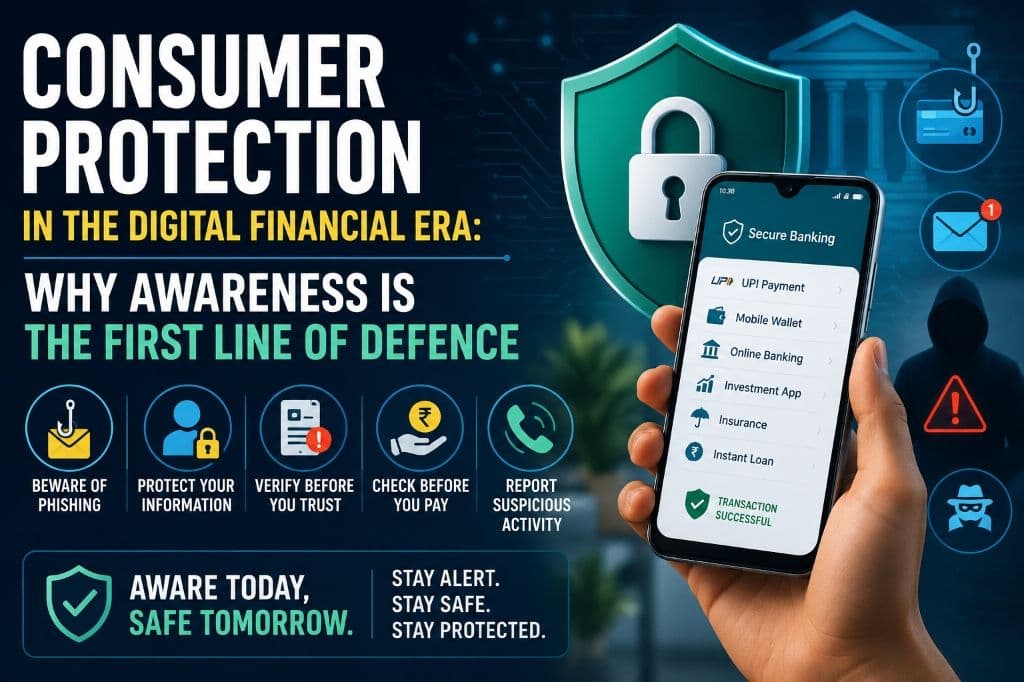
India’s financial ecosystem has undergone a dramatic transformation. Digital payments, online banking, mobile wallets, investment apps, insurance platforms, and instant lending services have made financial services more accessible than ever before.
However, the same technology that offers convenience has also created new risks. Consumers today face phishing attacks, fake customer care numbers, fraudulent investment schemes, identity theft, and unauthorized transactions.
Financial fraud can affect anyone—students, professionals, senior citizens, and small business owners. In many cases, fraudsters succeed because consumers are unaware of basic safety precautions.
Consumer protection is not only the responsibility of regulators and financial institutions; it also requires active participation by consumers themselves.
The Most Common Digital Financial Frauds
Fraud Type
Phishing
Fake emails or messages asking for credentials
UPI scams
Tricking users into approving payment requests
Fake customer care
Impersonating bank or company representatives
Screen-sharing fraud
Gaining remote access to the victim’s device
KYC update scams
Asking for personal information and OTPs
Investment fraud
Promising unrealistic returns
10 Essential Consumer Safety Rules
1
Never share OTPs, PINs, passwords, or CVV numbers.
2
Verify customer care numbers from official websites.
3
Do not install unknown screen-sharing applications.
4
Enable transaction alerts on mobile and email.
5
Use strong and unique passwords.
6
Check account statements regularly.
7
Update apps only through official app stores.
8
Avoid clicking suspicious links.
9
Report unauthorized transactions immediately.
10
Educate family members, especially senior citizens.
Act immediately
Important
Contact the bank or financial institution immediately.
Block cards or accounts if necessary.
Register a formal complaint.
Keep complaint numbers and records.
Report cyber fraud through official channels.
Monitor accounts for further suspicious activity.
Financial literacy is becoming as important as digital literacy. Schools, families, consumer organizations, regulators, and financial institutions all have a role in spreading awareness.
Every informed consumer helps create a safer financial ecosystem.
Technology will continue to change the way we bank, invest, insure, and make payments. The best protection against financial fraud is awareness, vigilance, and informed decision-making.
Consumer protection begins with understanding your rights and recognizing risks before they turn into losses.

When Pooja purchased a new air conditioner for ₹48,000, the salesperson strongly recommended an extended warranty plan.
When Manoj took his four-year-old hatchback for a routine service, he expected a bill of around ₹6,000–₹8,000.