
LOADING...
Digital technology has transformed the way people communicate, shop, bank, invest, and access essential services. While this digital revolution has made life more convenient, it has also created new opportunities for cybercriminals to exploit unsuspecting consumers.
Digital technology has transformed the way people communicate, shop, bank, invest, and access essential services. While this digital revolution has made life more convenient, it has also created new opportunities for cybercriminals to exploit unsuspecting consumers.
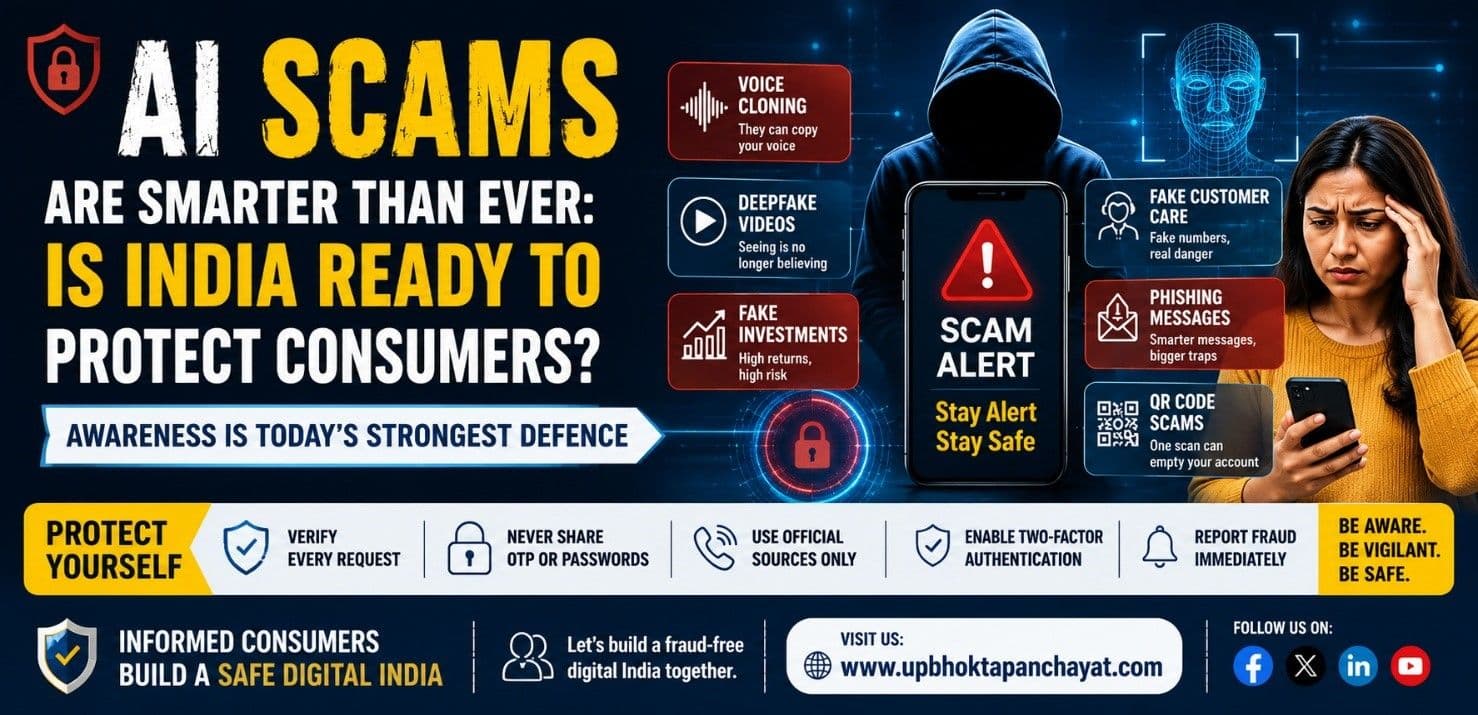
Cyber fraud is no longer limited to computer hackers. Fraudsters now use phone calls, text messages, social media, fake websites, artificial intelligence, and messaging applications to deceive people into revealing personal information or making unauthorized payments.
The best defence against cyber fraud is awareness. Understanding how fraudsters operate can significantly reduce the risk of becoming a victim.
Cyber fraud refers to any dishonest or criminal activity carried out through digital platforms with the intention of stealing money, personal information, or confidential data.
Cybercriminals constantly develop new methods to manipulate consumers by creating a sense of urgency, trust, or fear.
Remaining calm and verifying information before taking action can prevent many online scams.
Common Types of Cyber Fraud
Consumers should remain alert to common cyber threats, including:
Phishing emails requesting confidential information.
Fake banking or customer support calls.
Fraudulent investment opportunities.
QR code payment scams.
Fake online shopping websites.
Identity theft.
Social media account impersonation.
Delivery and courier scams.
Loan approval scams.
Job and work-from-home frauds.
Although these scams may appear convincing, most rely on human trust rather than advanced technology.
Never Share Confidential Information
Your personal financial credentials should always remain private.
Never disclose:
One-Time Passwords (OTPs)
UPI PIN
ATM PIN
Debit or credit card CVV
Internet banking passwords
Authentication codes
No genuine financial institution or service provider will ask you to reveal these confidential credentials.
Verify Before You Trust
Fraudsters often pretend to represent banks, government agencies, courier companies, or well-known businesses.
Before responding to any request:
Verify the sender's identity independently.
Check official contact details.
Confirm unexpected payment requests.
Avoid clicking unknown links.
Do not download files from unfamiliar sources.
Taking a few minutes to verify information can prevent significant financial loss.
Stay Safe While Shopping Online
Online shopping is convenient, but consumers should exercise caution.
Before making a purchase:
Buy from trusted websites.
Read product descriptions carefully.
Review return and refund policies.
Avoid offers that appear unrealistically attractive.
Keep payment confirmations and invoices.
Secure shopping habits help reduce the risk of fraud.
Personal information has become one of the most valuable targets for cybercriminals.
Consumers should avoid publicly sharing:
Identity documents.
Financial information.
Residential address.
Passwords.
Travel plans.
Copies of official records.
Limiting the amount of personal information available online reduces the risk of identity theft.
Secure Your Devices
A secure device is essential for safe digital transactions.
Consumers should:
Keep operating systems updated.
Install applications only from trusted sources.
Enable screen locks and biometric authentication.
Regularly review application permissions.
Use reputable security software where appropriate.
Device security is the first line of defence against cyber threats.
Quick action can help minimise financial and personal damage.
If you believe you have become a victim:
Stop any further transactions immediately.
Contact your bank or financial service provider.
Change passwords for affected accounts.
Preserve screenshots and transaction records.
Report the incident through the appropriate official channels.
Delaying action may increase financial risk.
Build Strong Digital Habits
Cyber security is not achieved through technology alone. Safe online behaviour is equally important.
Responsible digital users:
Verify information before making payments.
Think carefully before clicking links.
Monitor financial accounts regularly.
Use strong and unique passwords.
Stay informed about emerging cyber threats.
Daily awareness is one of the most effective forms of cyber protection.
Conclusion
As digital services continue to expand, cyber fraud is becoming more sophisticated and widespread. While technology providers continue to strengthen security, consumers remain the most important line of defence.
By protecting confidential information, verifying digital communications, maintaining secure devices, and staying informed about evolving fraud techniques, individuals can significantly reduce their exposure to cybercrime.
Cyber fraud awareness is not simply about avoiding financial loss—it is about protecting your identity, your privacy, and your confidence in the digital world.
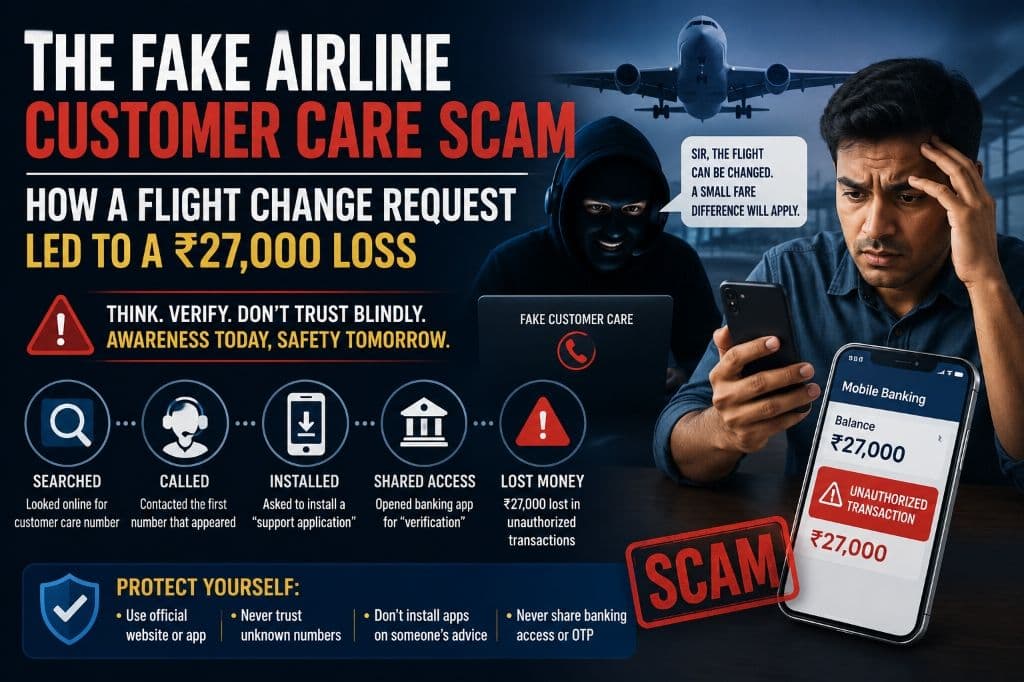
When Karan needed to reschedule a domestic flight, he searched online for the airline’s customer care number.
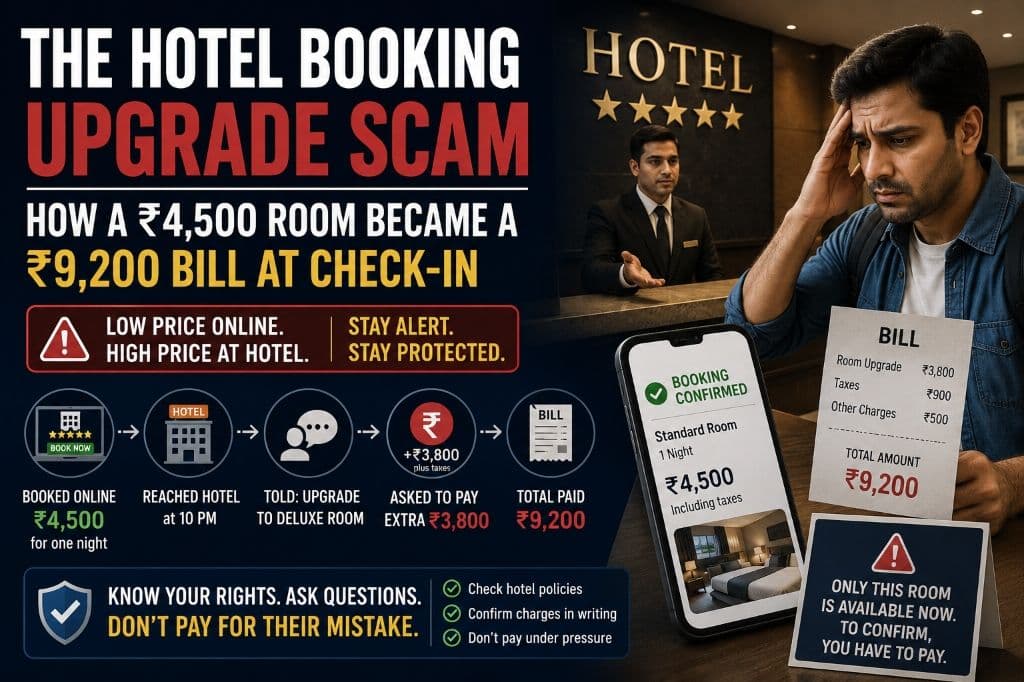
When Arvind booked a hotel through an online travel platform, the confirmation clearly showed ₹4,500 for one night, including taxes.