LOADING...
Banking has become an essential part of everyday life. Salaries are credited directly into bank accounts, bills are paid digitally, savings are managed online, and loans are processed faster than ever before. While technology has made banking more convenient, it has also increased the importance of financial awareness and responsible banking practices.
Banking has become an essential part of everyday life. Salaries are credited directly into bank accounts, bills are paid digitally, savings are managed online, and loans are processed faster than ever before. While technology has made banking more convenient, it has also increased the importance of financial awareness and responsible banking practices.
A bank account is more than just a place to keep money—it is the foundation of personal financial management. Understanding how banking services work enables consumers to protect their money, avoid unnecessary charges, and make informed financial decisions.
Many banking problems arise because consumers do not fully understand the products and services they use. Lack of awareness can result in unnecessary fees, financial losses, missed opportunities, or even cyber fraud.
A financially informed customer is better equipped to choose suitable banking products, identify suspicious activities, and resolve issues efficiently.
Different bank accounts are designed to meet different financial needs. Before opening an account, consumers should compare:
Account features
Minimum balance requirements
Service charges
Digital banking facilities
ATM accessibility
Customer service quality
Selecting the right account helps reduce unnecessary costs while improving convenience.
Every consumer should be aware of the charges associated with banking services.
These may include:
Account maintenance charges
ATM transaction fees
Debit card replacement charges
Cheque book fees
International transaction charges
Penalties for non-maintenance of minimum balance
Reading the schedule of charges before using banking services helps avoid unexpected deductions.
Internet banking and mobile banking provide convenience, but they also require responsible usage.
Consumers should always:
Use official banking applications.
Create strong and unique passwords.
Enable two-factor authentication whenever available.
Log out after completing online banking sessions.
Avoid accessing banking services on public Wi-Fi networks.
Good digital habits significantly reduce the risk of unauthorized access.
Regularly reviewing account activity helps identify errors and suspicious transactions at an early stage.
Consumers should:
Check account statements periodically.
Enable SMS and email transaction alerts.
Immediately report unauthorized transactions.
Keep contact information updated with the bank.
Early detection often prevents larger financial losses.
Banks offer a variety of credit products, including personal loans, home loans, vehicle loans, and education loans.
Before accepting any loan, carefully evaluate:
Interest rate
Total repayment amount
Processing fees
Repayment period
Prepayment conditions
Overall affordability
Responsible borrowing protects long-term financial stability.
Credit cards provide convenience and purchasing flexibility when managed responsibly.
Good credit card habits include:
Paying the outstanding balance on time.
Avoiding unnecessary borrowing.
Reviewing monthly statements carefully.
Understanding interest charges and fees.
Using credit within manageable limits.
A disciplined approach to credit supports better financial health.
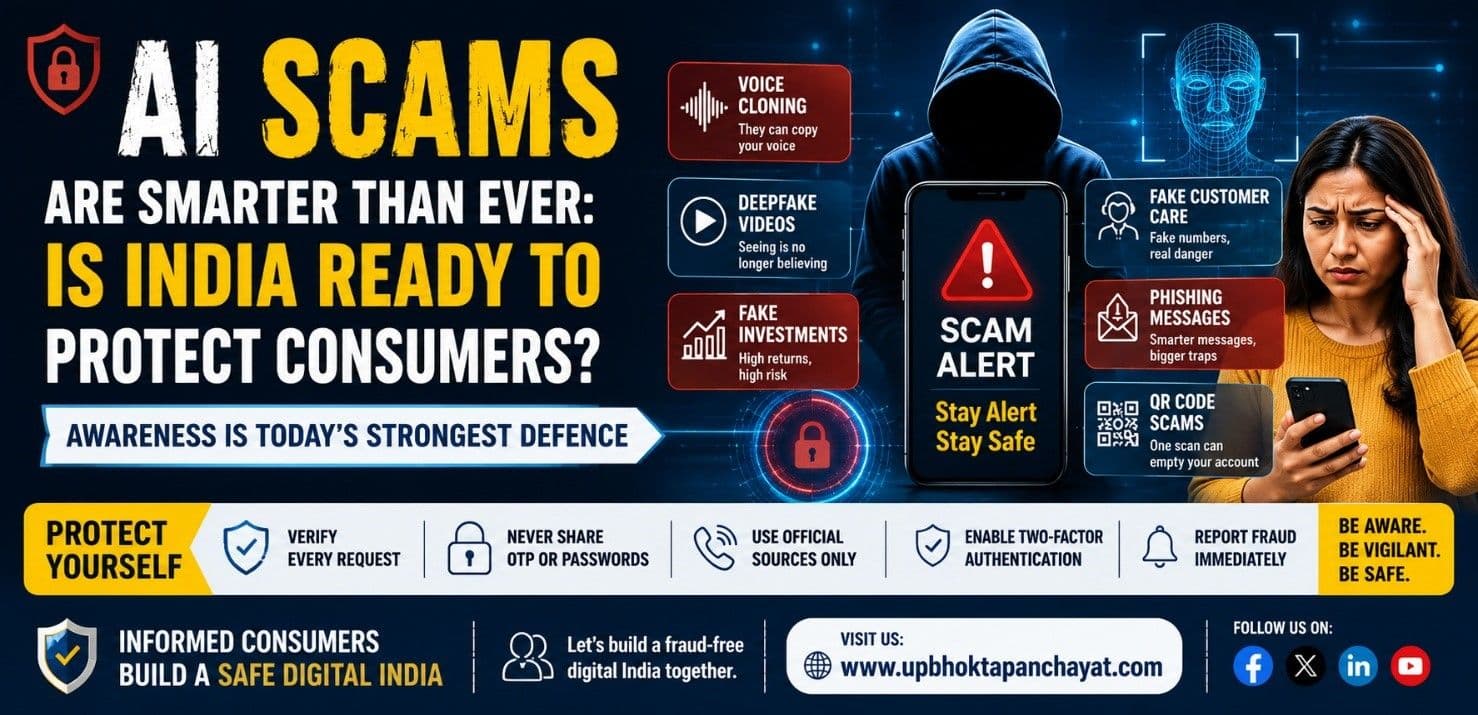
Cybercriminals frequently target banking customers using fake calls, emails, websites, and text messages.
Never share:
One-Time Passwords (OTPs)
Internet banking passwords
ATM PINs
Debit or credit card CVV numbers
Banks do not request confidential security credentials through phone calls, emails, or messaging applications.
Organized financial records simplify personal money management.
Consumers should preserve:
Bank statements
Loan agreements
Deposit receipts
Transaction confirmations
Tax-related documents
Proper documentation supports better financial planning and easier dispute resolution.
Conclusion
Modern banking offers speed, accessibility, and convenience, but it also requires informed decision-making and responsible financial behaviour.
Consumers who understand banking services, monitor their accounts regularly, protect their digital credentials, and make thoughtful borrowing decisions are better positioned to achieve long-term financial security.
Smart banking is not about using more financial products—it is about using the right products wisely, safely, and responsibly.
Financial institutions are the backbone of modern life. From receiving salaries and pensions to making digital payments, securing loans, and building savings, banks have become an integral part of every household. While banking services have evolved rapidly with technology, so have the risks faced by consumers.
Financial institutions are the backbone of modern life. From receiving salaries and pensions to making digital payments, securing loans, and building savings, banks have become an integral part of every household. While banking services have evolved rapidly with technology, so have the risks faced by consumers.