
LOADING...
Megha needed a cordless vacuum cleaner for her apartment. While browsing an e-commerce platform, she found a product with a 4.8-star rating and more than 2,000 positive reviews.
Megha needed a cordless vacuum cleaner for her apartment. While browsing an e-commerce platform, she found a product with a 4.8-star rating and more than 2,000 positive reviews.
Customers called it “better than premium brands” and “the best purchase of the year.”
Convinced by the glowing feedback, Megha ordered the vacuum for ₹8,000.
When the product arrived, the reality was very different. The suction was extremely weak, the battery lasted barely five minutes, and the build quality felt cheap.
Frustrated, Megha decided to leave a 1-star review.
Inside the product box, she found a small card that read:
“Get a ₹500 gift voucher! Send a screenshot of your 5-star review on WhatsApp.”
Suddenly, the thousands of glowing reviews made sense. Many of them were not genuine customer opinions—they were paid or incentivized reviews.
Online shoppers often rely heavily on ratings before making a purchase. A product with 4.8 stars appears trustworthy, while a product with 3 stars may be ignored.
Consumers make poor buying decisions.
Honest sellers lose business.
Unsafe or low-quality products gain visibility.
Trust in e-commerce platforms decreases.
The Bureau of Indian Standards (BIS) has issued guidelines for online consumer reviews.
Platforms and sellers are expected to prevent deceptive review practices.
Many reviews were posted within a few days.
The language was unusually similar.
Multiple reviewers used nearly identical phrases.
Very few reviews included detailed usage experience.
She took screenshots of the review page and the incentive card.
Megha filed a complaint with the e-commerce platform’s grievance officer, attaching:
The ₹500 review incentive card
Within 48 hours, the platform responded. The seller’s listing was temporarily suspended for review, and Megha received a full refund.
Hundreds of reviews appear in a very short period.
Most reviews use similar wording.
Reviews are extremely positive but lack details.
The product rating is very high despite poor product quality.
The seller offers cashback, vouchers, or gifts for 5-star reviews.
Read both positive and negative reviews.
Look for reviews with photos and videos.
Check whether reviewers mention long-term usage.
Compare ratings across multiple platforms.
Be suspicious of products with thousands of generic 5-star reviews.
If a seller is offering rewards for positive reviews:
Take photos of the incentive card or message.
Screenshot the product page.
File a complaint with the platform.
Escalate through the National Consumer Helpline (1915) if necessary.
Report misleading practices to the appropriate consumer authorities.
Fake reviews are not limited to vacuum cleaners or electronics. They are increasingly found in:
In some cases, misleading reviews can affect not just a consumer’s wallet but also their health and safety.
“A 5-star rating should represent genuine consumer satisfaction, not a paid marketing campaign. Consumers should examine reviews carefully and report any attempt to buy positive ratings through vouchers, cashback, or gifts.”
Are the reviews detailed?
Do they include real photos?
Were they posted gradually over time?
A few minutes of careful review analysis can save you from spending thousands of rupees on a product that looks excellent online but performs poorly in real life.
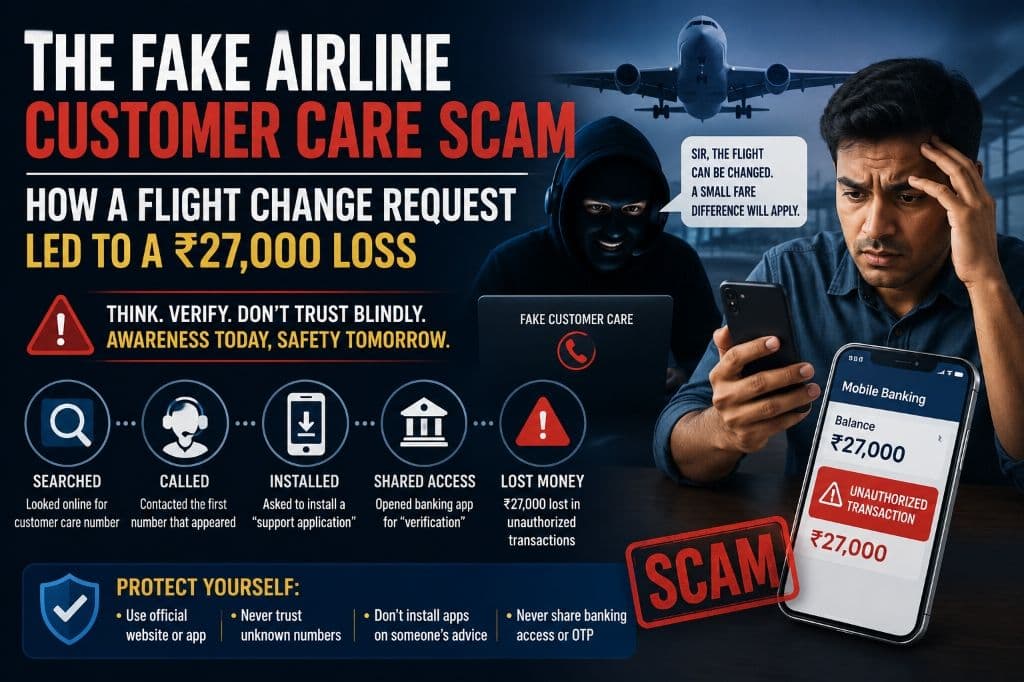
When Karan needed to reschedule a domestic flight, he searched online for the airline’s customer care number.
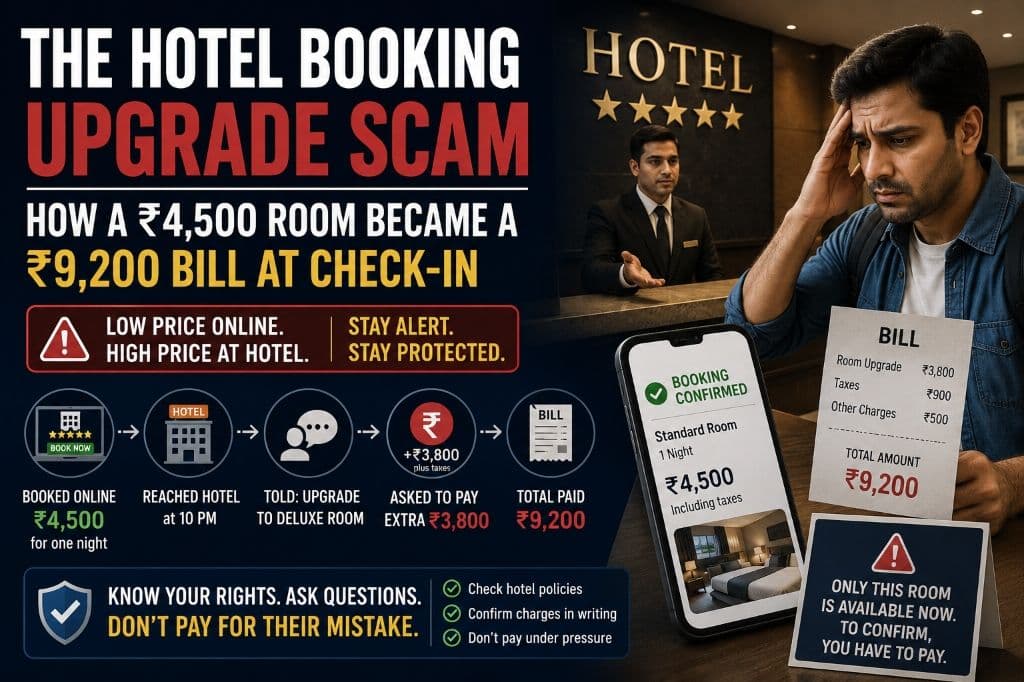
When Arvind booked a hotel through an online travel platform, the confirmation clearly showed ₹4,500 for one night, including taxes.