
LOADING...
Neha was expecting a gift from her cousin who lived abroad. So when she received an SMS that appeared to be from an international courier company, she did not immediately suspect fraud.
Neha was expecting a gift from her cousin who lived abroad. So when she received an SMS that appeared to be from an international courier company, she did not immediately suspect fraud.
“Your package has arrived in India. Customs clearance fee of ₹2,500 is pending. Pay immediately to avoid return of shipment.”
A tracking number was included, along with a payment link.
Neha clicked the link and paid ₹2,500 through UPI.
Moments later, she received another message:
“Verification failed. Additional security deposit of ₹7,500 required.”
Believing the package was genuine, she paid again.
The fraudsters continued sending messages for customs processing, insurance clearance, and warehouse charges.
By the time Neha realized something was wrong, she had transferred nearly ₹25,000.
The tracking number was fake, and there was no parcel at all.
Fraudsters had created a convincing delivery story and gradually extracted money through multiple small payments.
Because each payment seemed related to the same shipment, the victim felt invested in completing the process.
Once she realized the tracking number could not be verified on the courier company’s official website, she:
Stopped making further payments.
Called 1930, the cybercrime helpline.
Reported the UPI transaction IDs to her bank.
Filed an online cybercrime complaint.
Took screenshots of all SMS messages, links, and payment receipts.
In digital payment fraud cases, rapid reporting can help:
The message creates urgency.
You are asked to pay through a personal UPI ID.
The tracking number does not work on the official courier website.
Additional charges keep increasing.
The sender refuses to provide official customs documents.
The link leads to an unfamiliar payment page.
Visit the courier company’s official website directly.
Enter the tracking number yourself.
Call the official customer care number.
Ask for written customs documentation.
Verify whether the shipment actually exists.
Stop all further payments.
Call 1930 immediately.
Inform your bank.
Save all transaction IDs.
Take screenshots of messages and links.
File an online cybercrime complaint.
Links the fraudster’s number
Many victims keep paying smaller amounts because they fear losing the package or the money already paid.
This is exactly what fraudsters rely on. Once a payment has been made, they create new charges to keep the victim engaged.
“Consumers should independently verify any customs or courier payment request through the official website or customer care number of the courier company. Genuine delivery companies do not repeatedly demand increasing fees through informal payment links.”
If you receive a message saying “Pay customs or delivery charges immediately”:
Do not click the payment link immediately.
Verify the tracking number on the official courier website.
Call the company’s official customer care number.
Never continue paying additional fees without independent verification.
Report suspicious demands through 1930 if money has already been transferred.
A few minutes spent verifying a courier message can prevent a fake parcel from becoming a real financial loss.
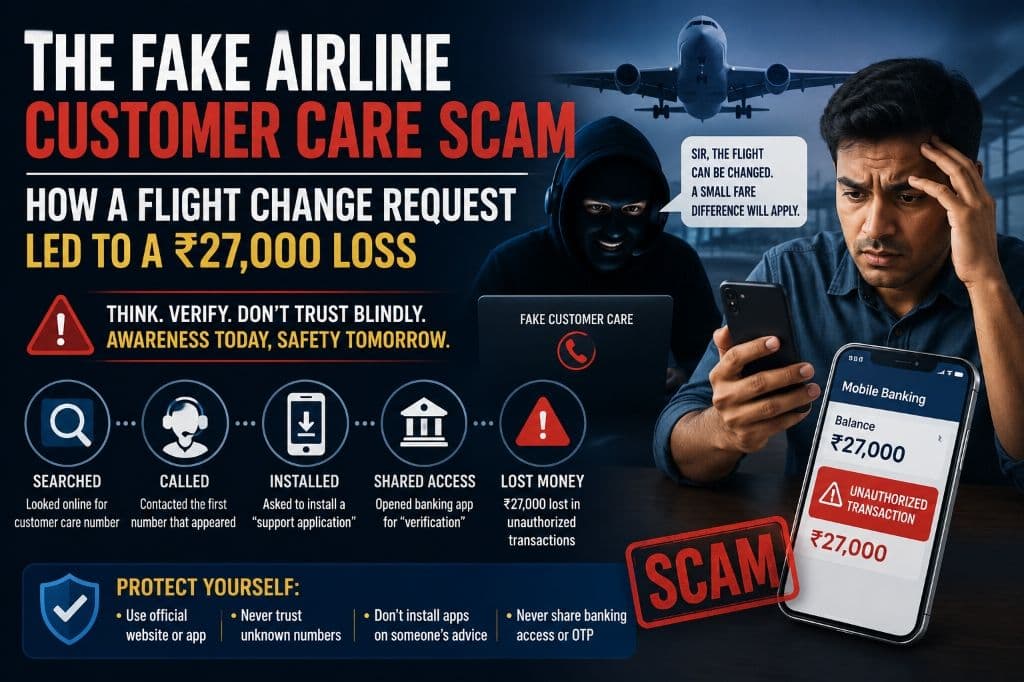
When Karan needed to reschedule a domestic flight, he searched online for the airline’s customer care number.
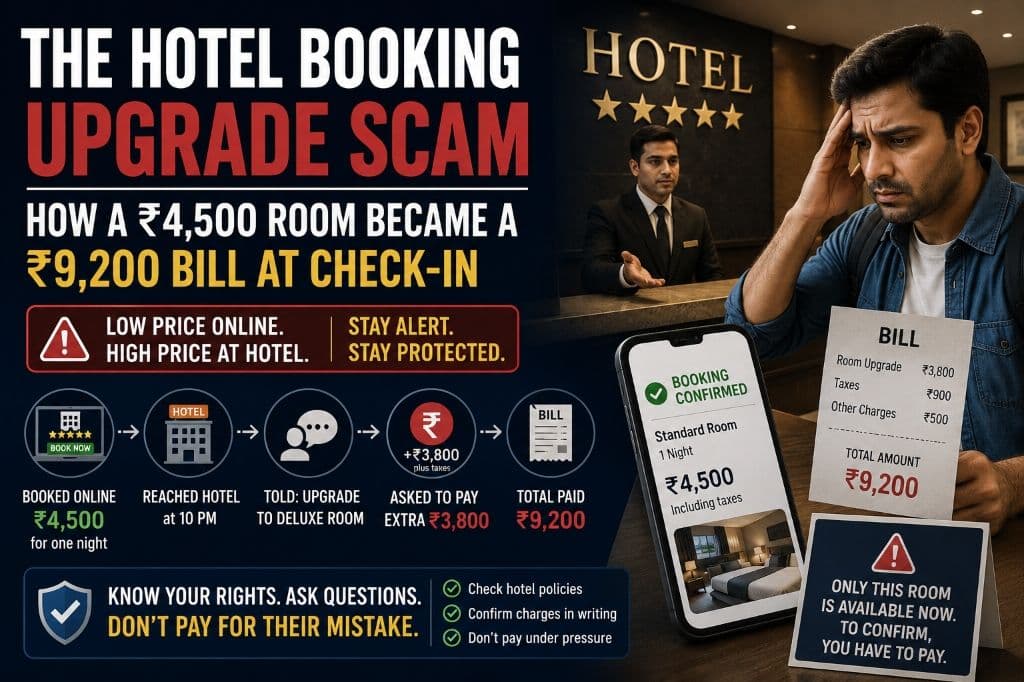
When Arvind booked a hotel through an online travel platform, the confirmation clearly showed ₹4,500 for one night, including taxes.