
LOADING...
When Karan needed to reschedule a domestic flight, he searched online for the airline’s customer care number.
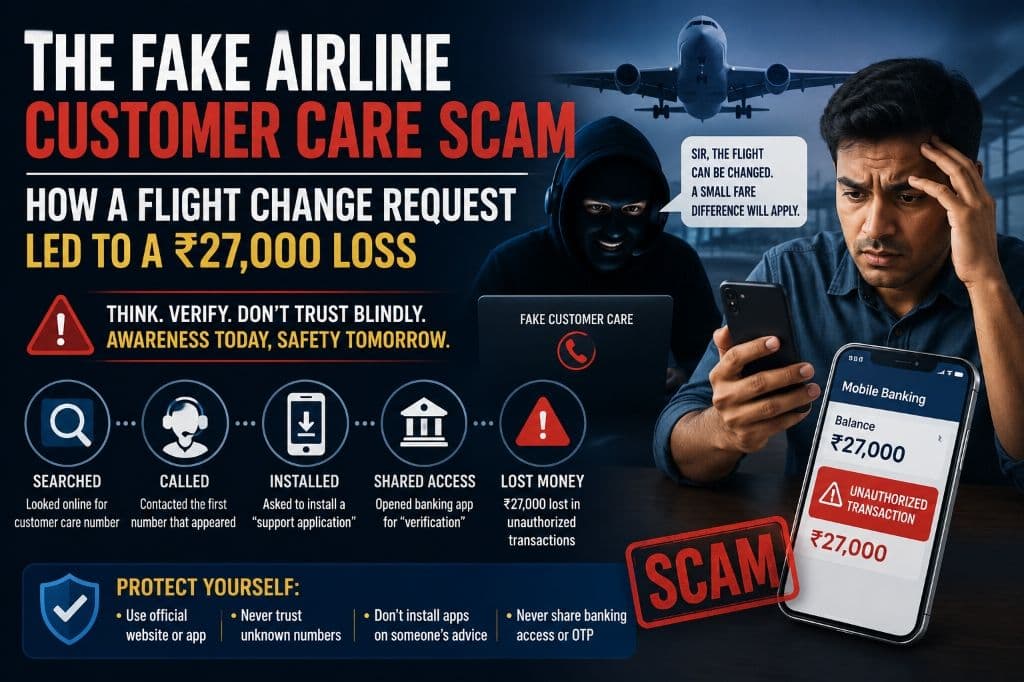
When Karan needed to reschedule a domestic flight, he searched online for the airline’s customer care number.
He clicked the first number that appeared in the search results and called it.
The person who answered sounded professional and immediately confirmed the booking details.
“Sir, the flight can be changed. A small fare difference will apply.”
The caller asked Karan to install a “support application” to complete the ticket modification.
Believing he was speaking to the airline, Karan installed the app.
The fraudster then instructed him to open his banking app for “verification of the refund balance.”
Within minutes, unauthorized transactions totaling ₹27,000 were processed from his account.
When Karan received debit alerts, he questioned the caller.
The line was disconnected immediately.
Later, he discovered that the number was not the airline’s official helpline. It had been posted online by fraudsters to target travellers searching for customer support.
Publish fake customer care numbers online.
Offer help with refunds, cancellations, or rescheduling.
Ask victims to install remote access apps.
Observe banking activity on the screen.
Initiate unauthorized transactions.
As soon as he realized the fraud, he:
Disconnected the phone from the internet.
Uninstalled the remote access app.
Called his bank and blocked digital banking services.
Reported the fraud on 1930.
Filed an online cybercrime complaint.
Saved screenshots of the search result, app, and transaction alerts.
When installed, such apps may allow a fraudster to:
View OTPs on the screen.
Watch UPI PIN entry patterns.
Access banking applications.
Guide the victim into authorizing payments.
Legitimate airlines do not require remote access to a customer’s phone for ticket changes.
You are asked to install a remote access app.
The caller requests OTPs or banking details.
Payment is demanded through a personal UPI ID.
The number was found through a random online search.
The caller pressures you to act immediately.
Use the airline’s official website or app.
Check the contact number printed on your booking confirmation.
Verify the domain name carefully.
Avoid numbers posted in comments or advertisements.
Disconnect from Wi-Fi and mobile data.
Uninstall the app immediately.
Change banking and UPI passwords.
Block cards and digital payment services.
Call 1930 without delay.
Monitor all accounts for suspicious activity.
Many people trust the first customer care number they find online.
Fraudsters exploit search results and advertisements to intercept customers before they reach the real airline.
“Consumers should contact airlines only through official websites, mobile apps, or booking confirmation emails. No genuine airline should ask a customer to install a remote access application or share banking credentials for ticket modification or refund processing.”
Use only official contact channels.
Never install remote access apps for ticket changes.
Do not share OTPs, UPI PINs, or banking details.
Verify refund and payment requests independently.
Call 1930 immediately if unauthorized transactions occur.
A few seconds spent verifying a customer care number can prevent a simple flight change request from becoming a major financial loss.
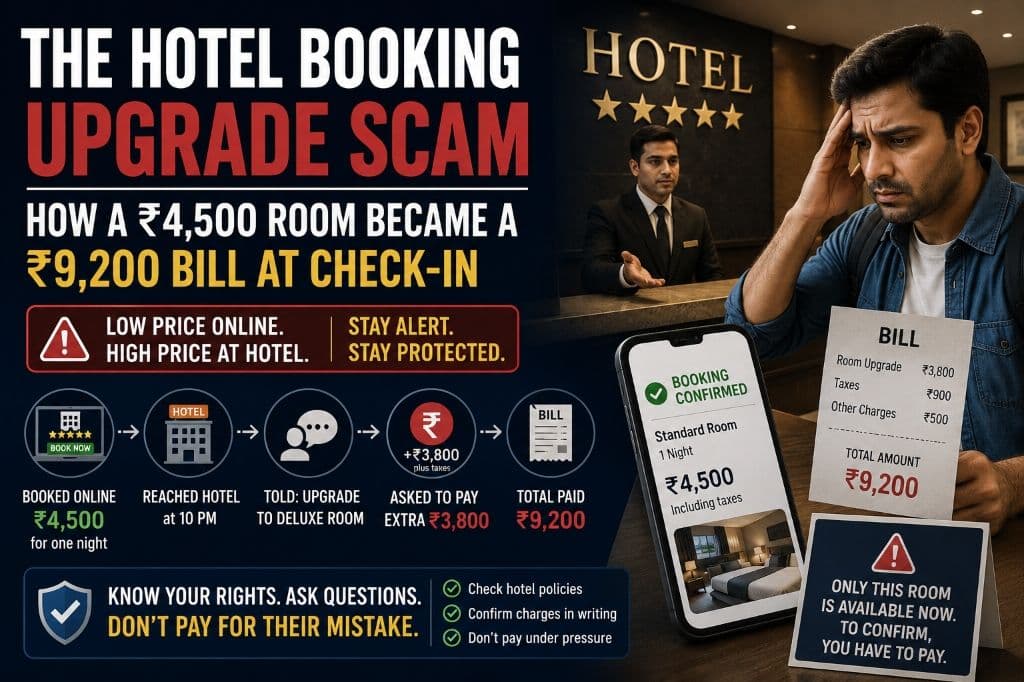
When Arvind booked a hotel through an online travel platform, the confirmation clearly showed ₹4,500 for one night, including taxes.
When Sanjay joined a Telegram group called “Elite Stock Advisory”, he was impressed by the screenshots posted daily.