
LOADING...
When Sunil received a call from someone claiming to be from his bank, the caller sounded professional and confident.
When Sunil received a call from someone claiming to be from his bank, the caller sounded professional and confident.
“Sir, your KYC has expired. If you do not update it today, your bank account and UPI services may be blocked.”
Sunil had recently heard about KYC updates in the news, so the call did not seem suspicious.
The caller sent a link through SMS and asked Sunil to complete the verification process.
The webpage displayed the bank’s logo and looked genuine.
Within minutes, multiple unauthorized transactions were processed.
By the time he checked his balance, ₹1.45 lakh had been transferred from his account.
The website was not a real banking portal. It was a phishing page designed to collect sensitive information.
Once Sunil entered his OTP, the fraudsters used the credentials to authorize transactions from his account.
“Your KYC has expired.”
“Your account will be frozen today.”
“UPI services will stop working.”
“Complete verification immediately.”
Fortunately, Sunil acted quickly.
He:
Called his bank’s emergency helpline.
Requested blocking of net banking and debit card services.
Reported the fraud on 1930, the national cybercrime helpline.
Filed an online complaint on the cybercrime reporting portal.
Saved screenshots of the SMS, phishing link, and transaction details.
In online banking fraud cases, rapid reporting can help authorities:
Even a delay of a few hours can significantly reduce the chances of freezing the funds.
The caller creates panic.
You are asked to click a link sent through SMS or WhatsApp.
The caller asks for OTPs, card details, or internet banking credentials.
You are told to update KYC immediately.
The call comes from a mobile number instead of an official bank channel.
OTP
Disconnect from the website immediately.
Change your banking passwords.
Block cards and digital payment services.
Call 1930 without delay.
File a cybercrime complaint online.
Monitor your bank account for further transactions.
Many victims first try to negotiate with the fraudster or repeatedly call the suspicious number.
Cyber experts advise consumers to stop interacting with the scammer immediately and focus on reporting the fraud to the bank and cybercrime authorities.
“A genuine bank may ask you to update KYC through official channels, but it will not ask for OTPs, card details, or internet banking credentials over a phone call. Consumers should verify any KYC request directly through the bank’s official app, website, or branch.”
Do not click links sent by the caller.
Do not share OTPs or banking details.
Verify through official bank channels.
Report suspicious calls immediately.
Call 1930 if money has already been transferred.
A few minutes of verification can prevent the loss of your entire savings.
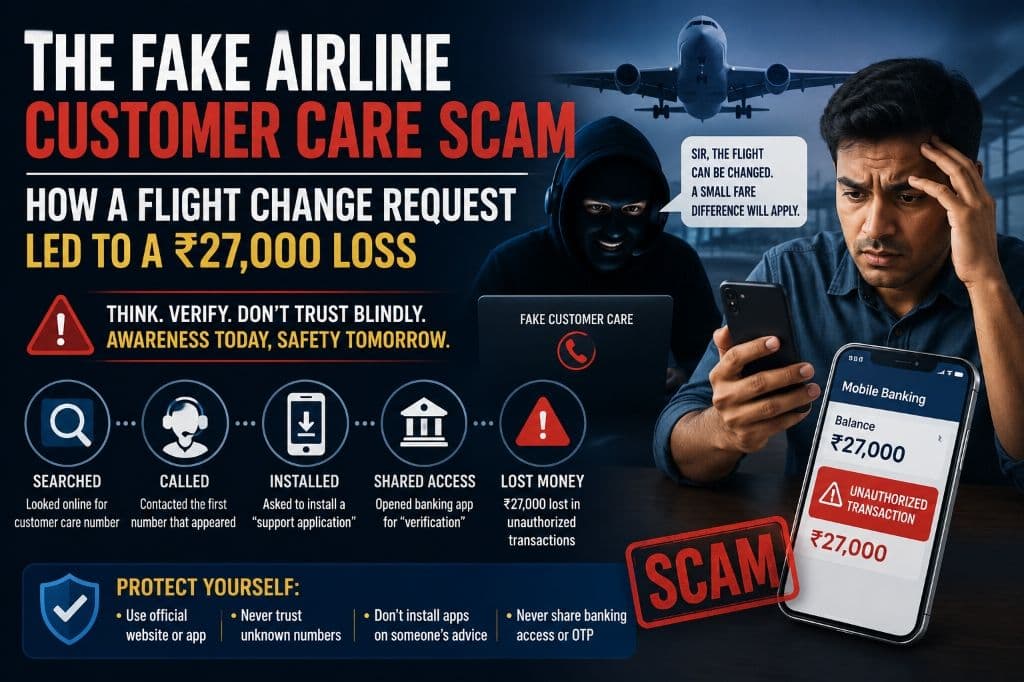
When Karan needed to reschedule a domestic flight, he searched online for the airline’s customer care number.
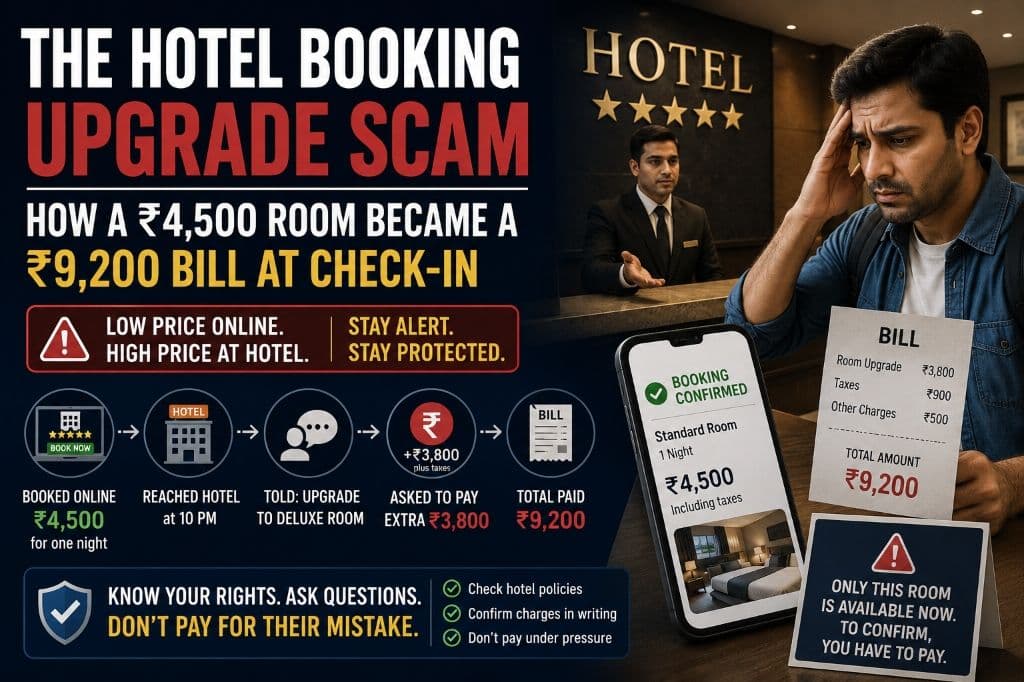
When Arvind booked a hotel through an online travel platform, the confirmation clearly showed ₹4,500 for one night, including taxes.