
LOADING...
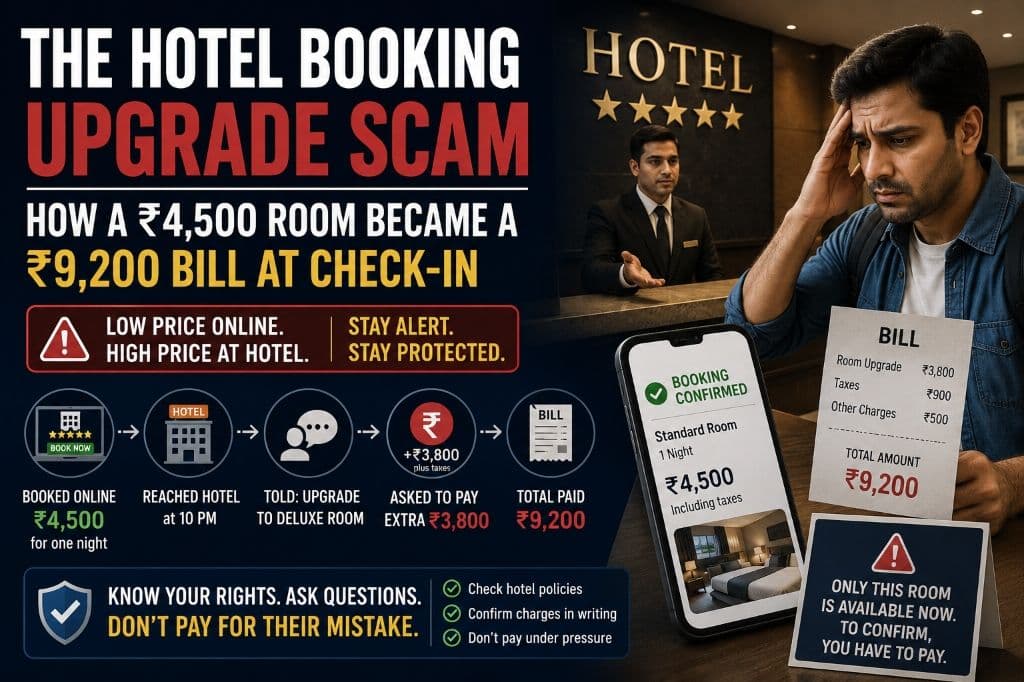
When Arvind booked a hotel through an online travel platform, the confirmation clearly showed ₹4,500 for one night, including taxes.
When Arvind booked a hotel through an online travel platform, the confirmation clearly showed ₹4,500 for one night, including taxes.
“Sir, the standard room category is currently unavailable. We have upgraded you to a deluxe room. The difference is ₹3,800 plus taxes.”
Arvind was tired and just wanted to check in, but the sudden increase surprised him.
When he questioned the charge, the staff responded:
“This is the only room available now. Otherwise, you may need to cancel the booking.”
For a traveller arriving late at night, the situation created significant pressure.
The final amount demanded was approximately ₹9,200.
“Mandatory” room upgrades
Instead of paying immediately, he:
Opened the booking confirmation email.
Took screenshots of the original price.
Asked the hotel to provide a written explanation for the upgrade charge.
Contacted the online travel platform’s customer support from the lobby itself.
“If the standard room is unavailable, why should I pay extra for a room that I did not request?”
This shifted the discussion from “upgrade pricing” to “failure to provide the booked category.”
Arvind paid ₹4,500 instead of ₹9,200, saving approximately ₹4,700.
The hotel says your booked room is unavailable.
Extra payment is demanded immediately.
You are told cancellation is the only alternative.
The charge is not reflected in your booking confirmation.
The hotel refuses to provide the reason in writing.
Show the booking confirmation.
Take screenshots of the confirmed price.
Ask for a written explanation of the additional charge.
Contact the booking platform immediately.
Do not agree verbally without understanding the revised bill.
Chat/email with hotel
Escalate through the booking platform’s grievance mechanism.
File a complaint with the National Consumer Helpline (1915).
Preserve all invoices and communication records.
Many travellers pay the additional amount first and dispute it later.
Resolving the issue before payment is often much easier than seeking a refund afterward.
“A confirmed hotel booking should not become significantly more expensive at check-in unless the consumer has knowingly agreed to a revised arrangement. Travellers should insist on written clarification for any additional charges that were not part of the original confirmation.”
Check your booking confirmation carefully.
Ask for the reason in writing.
Contact the booking platform immediately.
Preserve screenshots and invoices.
Escalate through official consumer channels if necessary.
A few minutes of verification at the reception desk can prevent a confirmed booking from turning into an unexpectedly expensive stay.
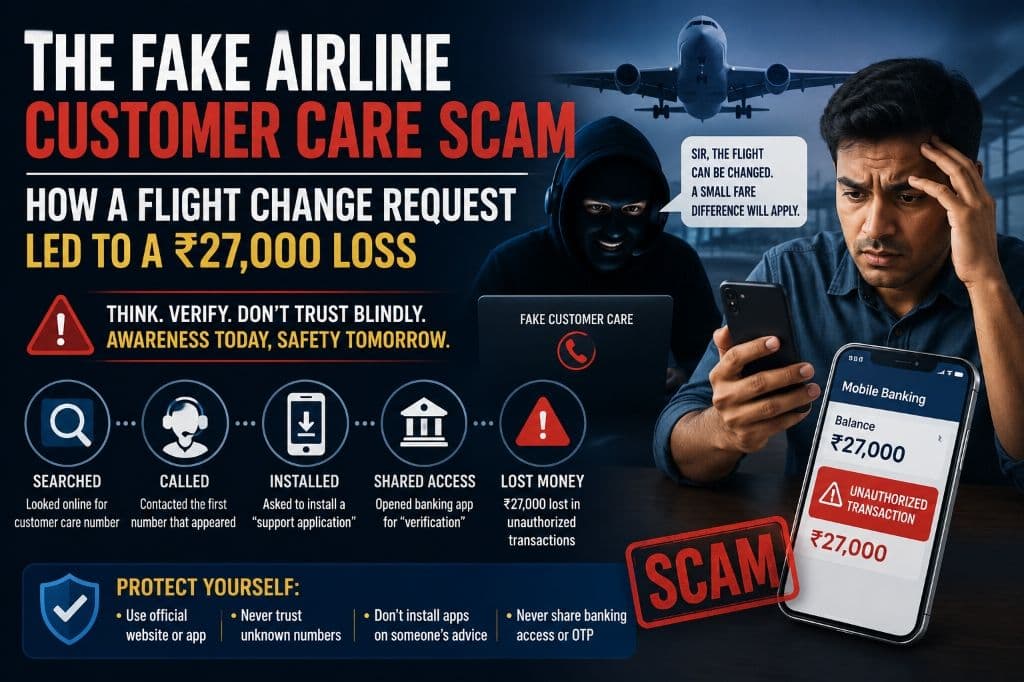
When Karan needed to reschedule a domestic flight, he searched online for the airline’s customer care number.
When Sanjay joined a Telegram group called “Elite Stock Advisory”, he was impressed by the screenshots posted daily.