
LOADING...
Deepak had planned a long-awaited family vacation to Udaipur. After comparing prices on multiple travel websites, he booked a premium lake-view resort through a popular online travel platform for ₹18,000.
Deepak had planned a long-awaited family vacation to Udaipur. After comparing prices on multiple travel websites, he booked a premium lake-view resort through a popular online travel platform for ₹18,000.
“Reservation Confirmed – Lake View Deluxe Room”
Confident that everything was arranged, Deepak, his wife, and his elderly mother drove nearly six hours to reach the hotel.
They arrived close to midnight.
When Deepak handed over the confirmation voucher, the hotel receptionist looked confused.
“Sir, we stopped working with this travel website three months ago. We have no booking under your name, and all rooms are sold out.”
Deepak was stunned.
He showed the payment receipt, booking ID, and confirmation email. The hotel manager repeated that the booking was not valid in their system.
His family was now stranded in an unfamiliar city after midnight.
The Travel Website’s Response
Deepak immediately called the travel platform’s customer support.
When Deepak requested an immediate refund, the executive said:
“The matter will be investigated. Refund cannot be processed instantly.”
Instead of accepting the situation silently, Deepak documented everything:
A video of the hotel manager confirming that the travel website no longer had an active partnership.
Photos of the reception desk.
His booking confirmation email.
The payment receipt.
Call logs showing repeated attempts to contact customer support.
Since his family needed immediate accommodation, he booked another hotel nearby and kept the invoice.
Under the Consumer Protection Act, 2019, online travel aggregators may be held responsible for:
A confirmed reservation is not merely a marketing promise—it forms part of the contractual service purchased by the consumer.
The next morning, Deepak sent a detailed email to the company’s grievance officer.
He also stated that if the matter was not resolved within 24 hours, he would escalate it through the National Consumer Helpline (1915) and the consumer dispute mechanism.
Within a day, the travel platform’s escalation team contacted Deepak.
Refunded the original booking amount of ₹18,000.
Reimbursed the cost of the replacement hotel.
Issued an apology for the inconvenience caused to the family.
The total recovery exceeded ₹33,000.
1
Record the hotel manager’s statement.
Take photos of the reception desk.
2
3
Keep the invoice for reimbursement.
4
Email the travel platform’s grievance officer.
5
Use the National Consumer Helpline or consumer dispute mechanism.
Yes. Depending on the circumstances, consumers may seek compensation for:
Many travelers argue with the hotel staff for hours but fail to collect documentary evidence.
A written record, video statement, and receipts often become far more valuable than a verbal dispute.
“A confirmed hotel booking creates a legitimate expectation of accommodation. If a travel platform sells unavailable inventory or fails to honor a confirmed reservation, the consumer should preserve evidence and seek both refund and compensation through the proper grievance mechanism.”
Stay calm.
Record the hotel’s statement.
Save all booking documents.
Keep receipts for alternate accommodation.
Demand both refund and reimbursement.
A properly documented complaint can often recover not only your booking amount but also the additional expenses caused by the failed reservation.
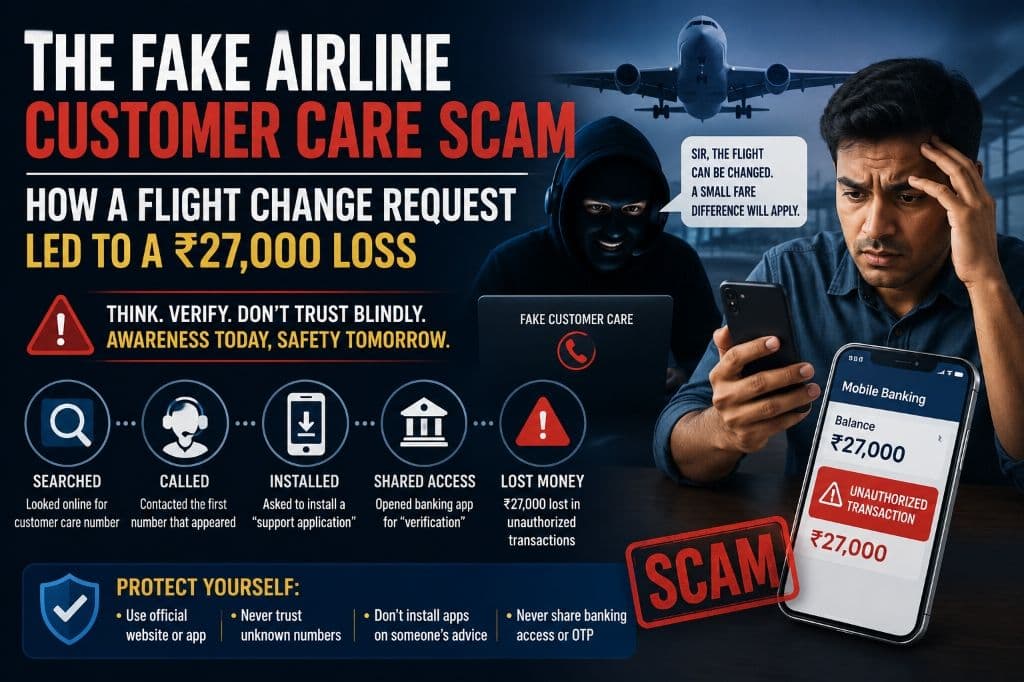
When Karan needed to reschedule a domestic flight, he searched online for the airline’s customer care number.
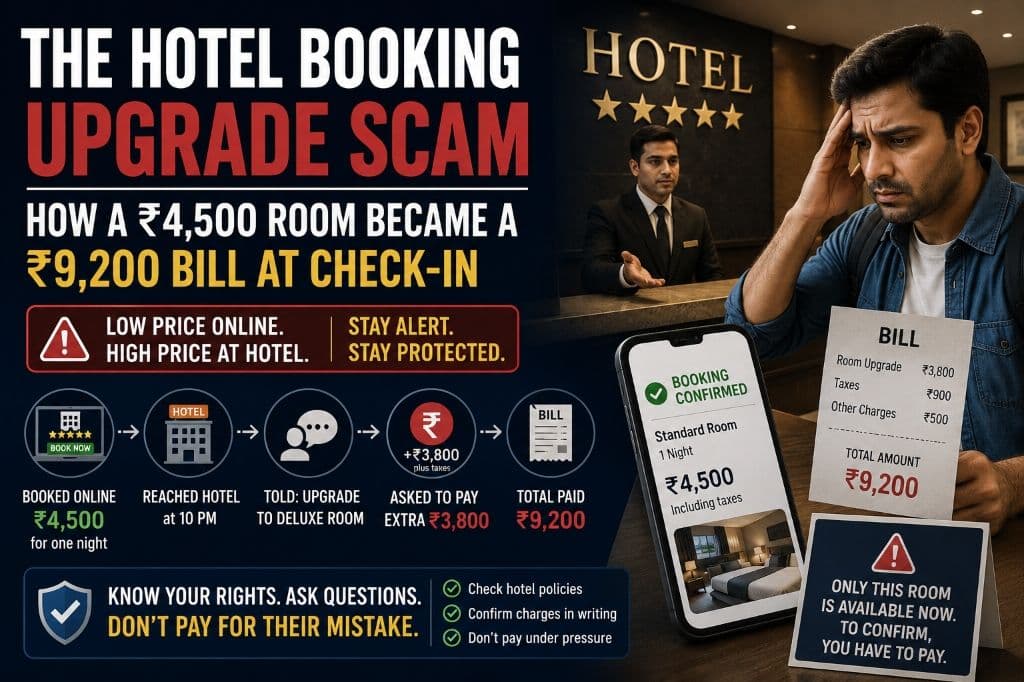
When Arvind booked a hotel through an online travel platform, the confirmation clearly showed ₹4,500 for one night, including taxes.