LOADING...
India's rapidly growing quick commerce sector has come under renewed scrutiny after a leading retailers' association urged the Government of India to examine whether the rapid expansion of certain e-commerce platforms into quick commerce complies with existing foreign direct investment (FDI) regulations. The development has once again highlighted the ongoing debate between traditional retail businesses and digital marketplaces.
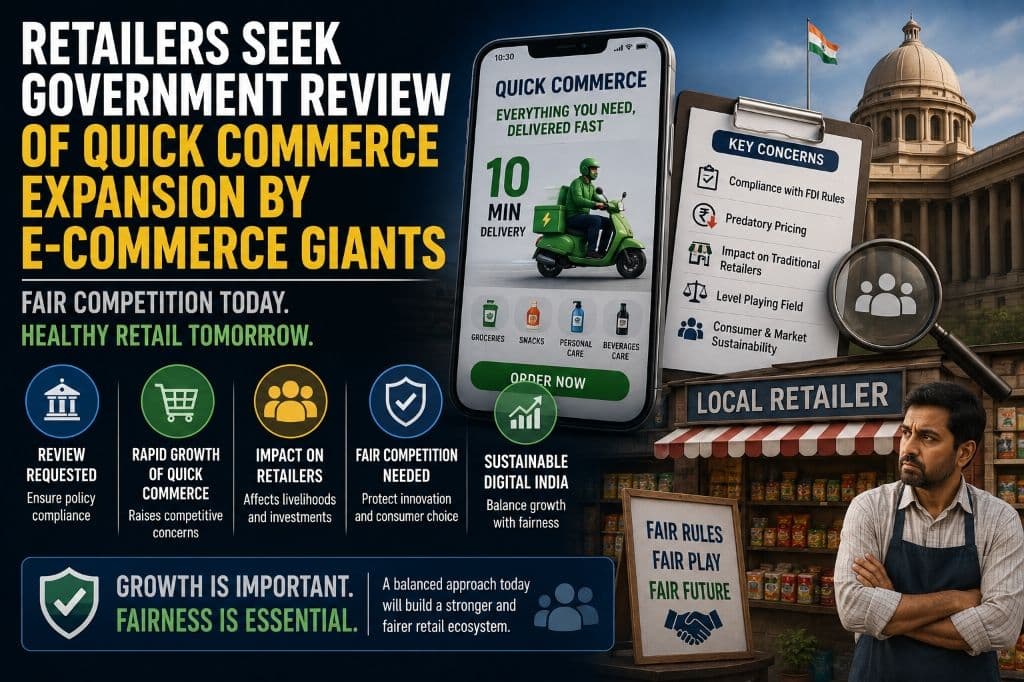
India's rapidly growing quick commerce sector has come under renewed scrutiny after a leading retailers' association urged the Government of India to examine whether the rapid expansion of certain e-commerce platforms into quick commerce complies with existing foreign direct investment (FDI) regulations. The development has once again highlighted the ongoing debate between traditional retail businesses and digital marketplaces.
According to reports, the industry body has requested authorities to assess whether current business models adopted by major online platforms are consistent with India's regulatory framework governing e-commerce operations. The association argues that the rapid growth of quick commerce could significantly impact traditional distributors and neighbourhood retailers if competition is not conducted on a level playing field.
Quick commerce, often referred to as "Q-commerce," is a retail model that promises delivery of groceries, household essentials, and daily-use products within a very short timeΓÇöoften between 10 and 30 minutes. The model has witnessed remarkable growth in India's urban centres as consumers increasingly value speed and convenience.
The sector has attracted substantial investments and intense competition, leading to aggressive expansion by several companies.
Although the current discussion primarily concerns regulatory compliance and market competition, it also has implications for consumers.
A competitive marketplace can offer:
Greater product choices.
Faster delivery services.
Competitive pricing.
Improved customer experience.
Innovation in retail services.
However, consumers also benefit when competition operates within a transparent and fair regulatory environment that encourages responsible business practices.
Balancing Innovation and Fair Competition
India's retail ecosystem consists of both organised e-commerce platforms and millions of small retailers who play a vital role in local economies.
Experts believe that maintaining a balance between technological innovation and fair competition is essential to ensure sustainable growth while protecting consumer interests and preserving market diversity.
Any regulatory review is expected to focus on compliance with existing laws rather than restricting innovation itself.
What Happens Next?
The matter is likely to receive attention from policymakers and regulators as India's digital commerce landscape continues to evolve. Any future policy decisions could influence how quick commerce businesses operate while shaping the competitive environment for retailers and online marketplaces.
Consumers should continue making purchasing decisions based on price, product quality, seller credibility, delivery reliability, and after-sales service rather than promotional offers alone.
India's rapidly expanding quick commerce industry has come under renewed attention after retailers sought a review of the rapid expansion of major e-commerce platforms into the sector. The request focuses on ensuring that business practices remain consistent with India's regulatory framework while maintaining fair competition across the retail ecosystem.
Six Workshops. Six Padyatras. Six Locations. One Mission to Strengthen Investor Protection at the Grassroots.