LOADING...
India’s financial ecosystem has become increasingly digital. Consumers today use UPI, mobile banking, credit cards, digital wallets and online lending platforms for everyday transactions. While these services have improved convenience, they have also led to a sharp rise in complaints related to failed transactions, unauthorized debits, excessive charges, loan disputes and delayed grievance resolution.
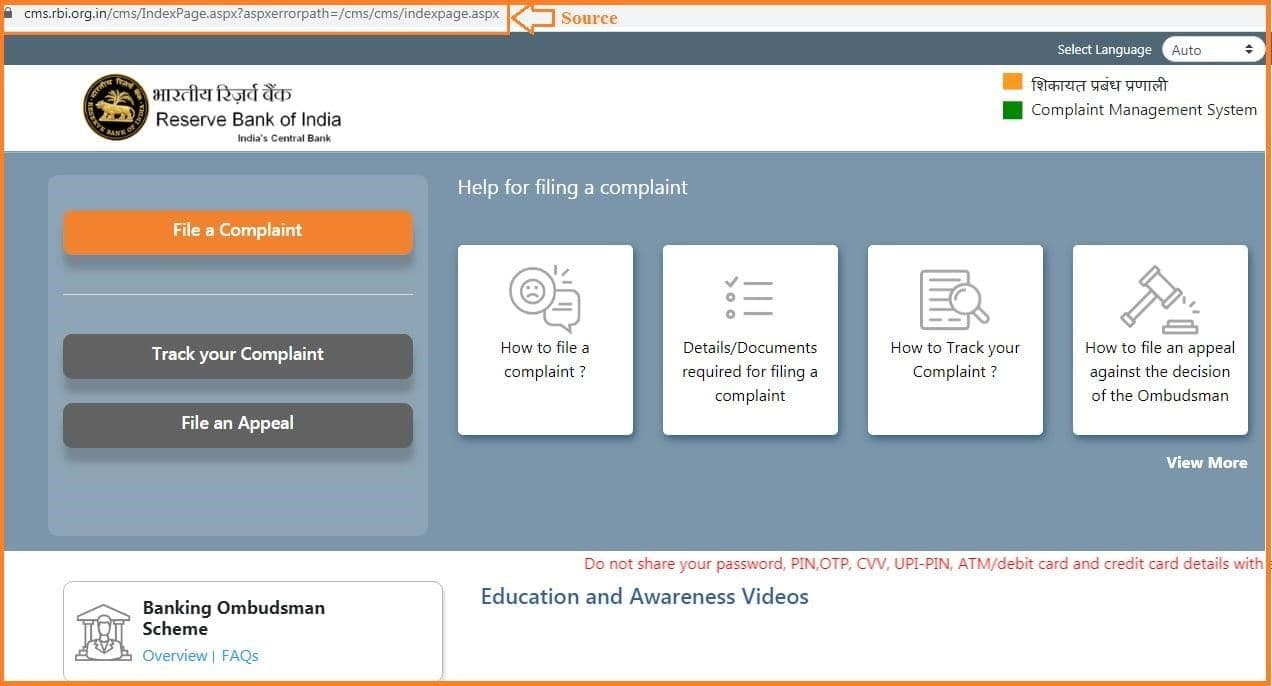
To address these concerns, the Reserve Bank of India introduced the Complaint Management System (CMS) Portal as a centralized online platform for consumer grievance redressal. The portal is designed to simplify the process of filing complaints against RBI-regulated entities and improve transparency in complaint handling.


What Is the RBI CMS Portal?
The RBI CMS Portal is a single-window online grievance management system that enables consumers to submit complaints against banks, NBFCs, payment system operators and other regulated entities under the jurisdiction of the RBI.
The platform allows consumers to file complaints online, upload supporting documents, track complaint status, receive updates on grievance processing and file appeals where applicable.
By consolidating complaints on a single platform, the RBI has reduced the need for consumers to identify different ombudsman offices or regulatory channels.
Consumer Protection Perspective
“आरबीआई के उपभोक्ता संरक्षण दृष्टिकोण के अनुरूप, शिकायतों का समयबद्ध और पारदर्शी समाधान वित्तीय प्रणाली में उपभोक्ताओं के विश्वास को मजबूत करने के लिए आवश्यक माना गया है।”
Why the Portal Matters
Consumer protection in financial services depends not only on regulations but also on the effectiveness of grievance redressal mechanisms. Many consumers, especially senior citizens and first-time digital users, struggle with locating the correct complaint channel, understanding escalation procedures, tracking the progress of their complaint and obtaining timely responses from financial institutions.
The CMS Portal addresses these gaps by offering a standardized and accessible complaint process.
Which Institutions Can Be Reported?
RBI-Regulated Entities Covered
Comprehensive
Commercial Banks
Co-operative Banks
Regional Rural Banks
Non-Banking Financial Companies (NBFCs)
Credit Card Issuers
Prepaid Wallet Companies
UPI and Payment System Participants
Common Issues Reported Through CMS
Issue
Can Be Filed on CMS?
Failed UPI transaction
Yes
Unauthorized debit
Yes
Credit card billing dispute
Yes
ATM cash not dispensed
Yes
Loan foreclosure charges
Yes
Account closure delay
Yes
Insurance claim dispute
No (IRDAI jurisdiction)
Stock market trading dispute
No (SEBI jurisdiction)
The Most Important Requirement
First Complain to the Bank or NBFC
Consumers cannot directly approach the RBI Ombudsman as the first step.
A complaint can be escalated through the CMS Portal if:
How to File a Complaint
Step-by-Step
Online process
Visit the RBI CMS Portal.
Register using a mobile number and email address.
Select “File a Complaint”.
Choose the concerned bank, NBFC or payment company.
Select the complaint category.
Provide a concise factual description of the issue.
Upload supporting documents such as screenshots, statements, emails and previous complaint references.
Submit the complaint and save the Complaint Reference Number (CRN).
Tracking the Complaint
Consumers can use the “Track Complaint” option on the portal to monitor the status of their grievance. This feature improves transparency and reduces uncertainty regarding the progress of complaint handling.
Key Consumer Protection Benefits
Single-window access
No need to search for multiple ombudsman offices.
Digital accessibility
Complaints can be filed from any location.
Documented evidence
Consumers can attach supporting proof.
Status visibility
Real-time complaint tracking.
Appeal mechanism
Consumers have an option to appeal in eligible cases.
Areas Where Further Consumer Awareness Is Needed
Despite the availability of the CMS Portal, many consumers remain unaware of the need to first approach the bank or NBFC, the 30-day waiting period before escalation, the importance of preserving complaint reference numbers, the distinction between RBI, IRDAI and SEBI jurisdictions and how to present complaints with adequate documentary evidence.
Strengthening public awareness on these aspects can significantly improve the effectiveness of the grievance redressal framework.
Recommendations for Consumers
Best Practices
Conclusion
The RBI CMS Portal represents an important step toward strengthening consumer protection in India’s digital financial ecosystem. By providing a centralized, transparent and technology-enabled grievance redressal mechanism, the platform has made it easier for consumers to escalate unresolved complaints against banks, NBFCs and payment service providers.
As digital financial transactions continue to expand, awareness and effective use of the CMS Portal can play a crucial role in ensuring accountability, improving grievance resolution and enhancing consumer confidence in the financial system.

India continues to expand its digital banking infrastructure as part of its broader financial inclusion strategy. According to industry updates, the country plans to increase the number of Digital Banking Units, enabling consumers to access a wider range of banking, insurance, and pension-related services through technology-driven channels.
Six Workshops. Six Padyatras. Six Locations. One Mission to Strengthen Investor Protection at the Grassroots.