
LOADING...
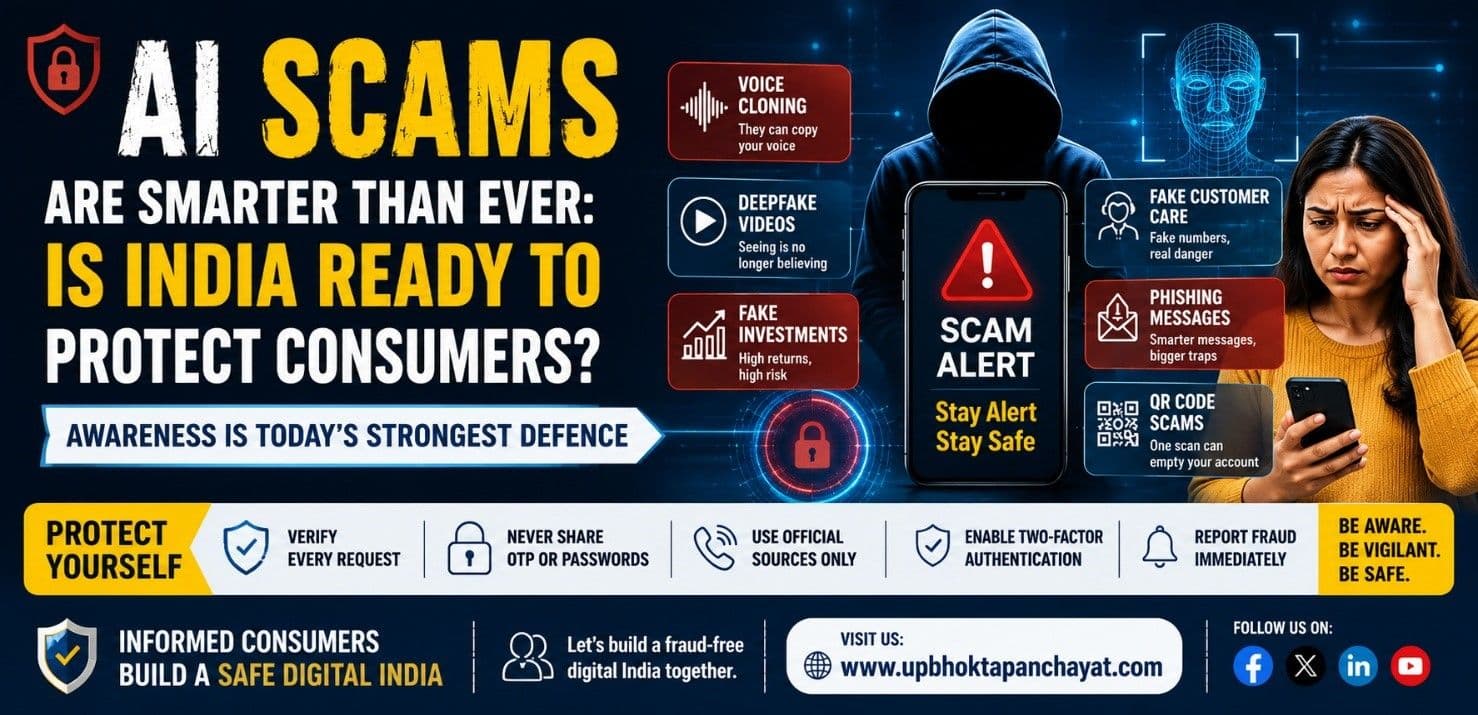
Artificial Intelligence (AI) has rapidly become an integral part of our daily lives. From helping us search for information and translate languages to improving banking services and online shopping, AI is making technology faster, smarter and more convenient. Businesses are using AI to provide better customer service, detect financial fraud, improve healthcare and personalise consumer experiences.
However, every technological advancement brings new challenges. The same AI that helps businesses improve efficiency is also being exploited by cybercriminals to design highly convincing frauds. Today's scams are no longer limited to fake emails or suspicious phone calls. Fraudsters can now generate realistic voices, create fake videos, impersonate trusted individuals and produce convincing messages within seconds.
For consumers, this means that the ability to identify fraud has become more difficult than ever before. A familiar voice, a professional-looking website or a convincing video can no longer be accepted as proof of authenticity. In the age of Artificial Intelligence, awareness has become the most valuable form of consumer protection.
A New Era of Digital Fraud
Digital fraud is evolving at an unprecedented pace. Earlier, scammers relied on mass messaging, random phone calls or poorly designed fake websites. Today, AI enables criminals to create personalised attacks that appear genuine and trustworthy.
Instead of targeting thousands of people with the same message, fraudsters can now customise scams based on publicly available information from social media, professional networking platforms and other digital sources. The result is a scam that feels personal, urgent and believable.
This shift has significantly increased the challenge for consumers. Fraud is no longer only a technical issue—it has become a psychological one. Criminals manipulate emotions such as fear, excitement, trust and urgency to influence decision-making.
Understanding AI-Enabled Scams
Artificial Intelligence does not commit fraud on its own. Rather, it provides fraudsters with sophisticated tools to impersonate identities, generate realistic content and automate deceptive activities.
Some of the most common AI-enabled scams include:
The increasing realism of these techniques means that consumers must verify information rather than relying on appearances.
Voice Cloning: When Familiar Voices Can No Longer Be Trusted
One of the fastest-growing threats is AI-based voice cloning. Using only a short audio recording available online, specialised software can reproduce a person's speech with remarkable accuracy.
Imagine receiving a call that sounds exactly like your child asking for urgent financial help after an accident. Without verification, many people may immediately transfer money.
Consumers should remember a simple rule:
A familiar voice should never replace independent verification.
Whenever money is involved, confirm the request using another trusted communication method.
Deepfake Videos: Seeing Is No Longer Believing
Video has traditionally been considered strong evidence of authenticity. AI-generated deepfake technology is changing that assumption.
Fraudsters can manipulate videos to create convincing but entirely false visual content. Public figures, company executives and even family members can appear to say things they never actually said.
As deepfake technology becomes more accessible, consumers should develop a healthy habit of questioning sensational videos, urgent requests and unexpected announcements.
Digital awareness now requires critical thinking rather than blind trust.
The Growing Threat of Fake Customer Support
Many consumers search the internet when they need customer support for banks, airlines, insurance companies or payment platforms.
Fraudsters exploit this behaviour by creating fake websites, advertisements and social media pages displaying fraudulent helpline numbers. During the call, consumers may be asked to install remote access software, reveal confidential information or approve financial transactions.
The safest approach is to contact organisations only through their official websites or official mobile applications.
Investment Scams Are Becoming More Sophisticated
Online investment fraud has become increasingly professional. Modern scam websites often include impressive graphics, fake testimonials, fabricated performance charts and AI-generated promotional videos.
Some scams falsely suggest partnerships with reputed organisations or misuse images of well-known personalities to build credibility.
Consumers should remember that genuine investments involve risk. Any offer guaranteeing extraordinary returns with little or no risk deserves careful scrutiny.
Before investing, verify whether the organisation is properly regulated and conduct independent research rather than relying solely on advertisements or social media recommendations.
Why Consumers Continue to Become Victims
Technology alone does not explain the increase in digital fraud. Human behaviour remains the most important factor.
Consumers often respond quickly when they experience:
Cybercriminals deliberately create emotional situations that reduce careful thinking.
Learning to pause, verify and question unexpected requests can prevent many fraud attempts.
Senior Citizens Require Greater Protection
Senior citizens frequently become targets because fraudsters assume they may be less familiar with rapidly changing digital technologies.
Common scams include fake pension updates, insurance renewals, banking verification requests and medical emergencies.
Family members should regularly discuss cyber safety with elderly relatives, encourage them to verify every financial request and remind them that legitimate organisations never demand confidential banking credentials over phone calls or messaging platforms.
Protecting senior citizens should become a shared family responsibility.
Young Consumers Are Not Immune
Contrary to popular belief, younger consumers are also vulnerable.
Students and young professionals regularly encounter fake internship offers, scholarship scams, gaming rewards, cryptocurrency schemes and fraudulent online shopping promotions.
Confidence in technology should never replace caution.
Digital literacy includes understanding online risks as much as using digital services.
Building Safe Digital Habits
Consumers can substantially reduce their exposure to fraud by adopting a few simple practices:
These habits require only a few minutes but can prevent significant financial and emotional losses.
Consumer Awareness Is Everyone's Responsibility
Protecting consumers cannot be achieved by individuals alone.
Banks should continue investing in fraud detection technologies. Technology companies should strengthen identity verification and remove fraudulent content promptly. Regulators should encourage greater transparency, faster complaint resolution and nationwide awareness initiatives. Educational institutions should include digital safety in consumer education programmes.
Media organisations and civil society also have an important role in informing consumers about emerging threats before fraud becomes widespread.
Looking Ahead
Artificial Intelligence will continue transforming every sector of the economy. The objective should not be to fear technology but to use it responsibly.
As AI becomes more powerful, consumer awareness must evolve at the same pace. Every informed consumer contributes to a safer digital ecosystem by questioning suspicious requests, verifying information and sharing knowledge with family members and communities.
The future of India's digital economy depends not only on technological innovation but also on consumer confidence. That confidence can be protected only through continuous education, responsible innovation and collective commitment to consumer safety.
Awareness is no longer optional—it is an essential life skill in the age of Artificial Intelligence.
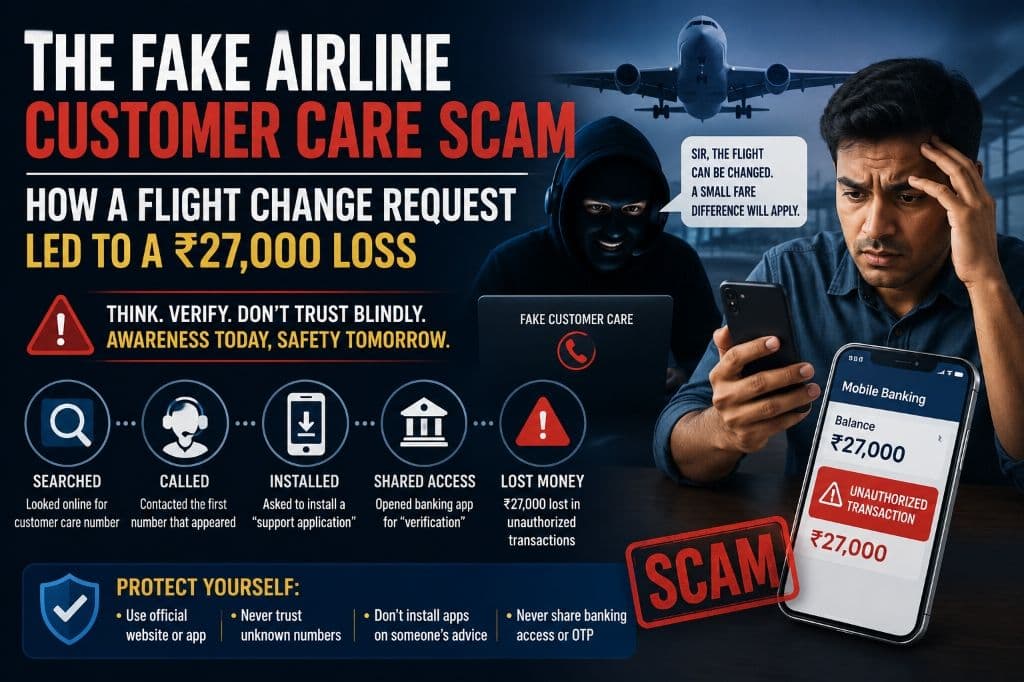
When Karan needed to reschedule a domestic flight, he searched online for the airline’s customer care number.

When Arvind booked a hotel through an online travel platform, the confirmation clearly showed ₹4,500 for one night, including taxes.