LOADING...
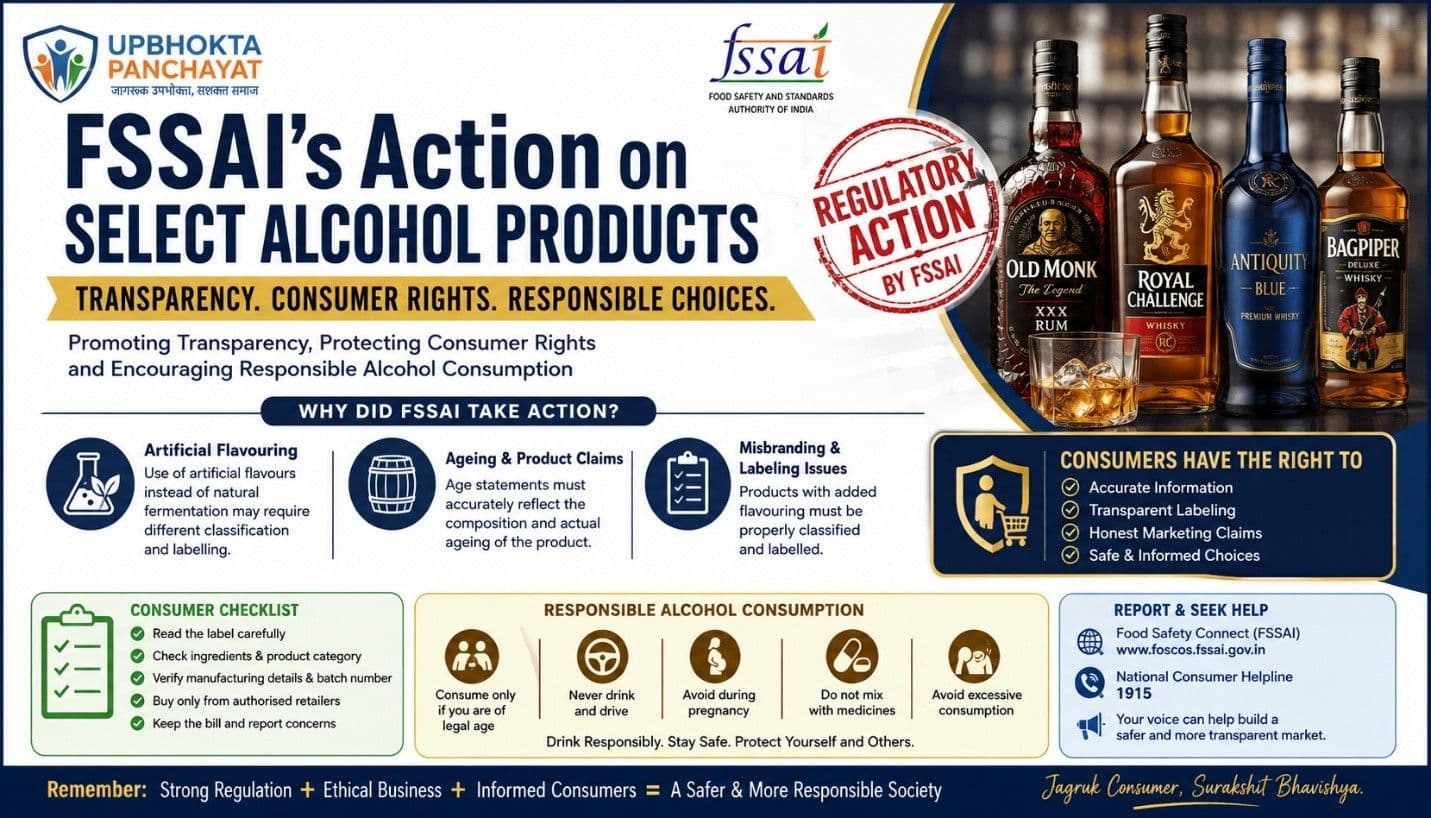
In August 2026, the Food Safety and Standards Authority of India (FSSAI) initiated regulatory action against certain variants and batches of popular alcoholic beverage brands following inspections and regulatory scrutiny. The action has generated widespread public discussion on product quality, transparent labelling, regulatory compliance, and consumer rights.
It is important to clarify that the reported action relates to specific product variants, batches, or manufacturing units and should not be interpreted as a blanket ban on entire brands. The case highlights a broader issue that extends beyond alcohol—it reinforces the importance of transparency, truthful labelling, and informed consumer choice.
Which Products Came Under Regulatory Scrutiny?
According to publicly available reports, certain variants of products marketed under brands such as:
were reportedly subjected to regulatory action or notices based on observations related to compliance with applicable standards.
Why Did FSSAI Take Action?
1. Questions Over Artificial Flavouring
Reports indicate that regulators examined whether certain products marketed as standard whisky or rum contained added flavouring that required different product classification under applicable regulations.
For consumers, the issue is not merely about ingredients—it is about receiving accurate and transparent information before making a purchasing decision.
2. Ageing and Product Claims
Some products reportedly carried statements suggesting extended ageing or maturation.
Regulatory scrutiny focused on whether these claims accurately reflected the composition of the product. If ageing claims do not correspond with the actual product characteristics, consumers may not be receiving complete or accurate information.
3. Product Classification and Labelling
Food regulations require products to be labelled according to their actual composition.
Where flavouring agents are used, manufacturers are expected to classify and label products appropriately. Failure to do so may amount to misleading product presentation and can affect consumers' ability to make informed choices.
Why This Matters for Consumers
This issue goes far beyond alcoholic beverages.
Consumers have the right to:
Whether purchasing food, beverages, cosmetics, medicines, or electronic products, consumers deserve truthful information that allows them to compare products fairly.
Consumer Tips
Consumers should always:
Consumer awareness remains the strongest safeguard against deceptive practices.
Responsible Alcohol Consumption: A Shared Responsibility
Consumer protection is not limited to ensuring that products comply with regulatory standards. It also includes promoting Responsible Alcohol Consumption, which is a shared responsibility of consumers, industry, government, healthcare professionals, and civil society.
Alcohol should only be consumed by adults of legal drinking age and always in moderation. Consumers should never drink and drive, avoid alcohol during pregnancy, refrain from mixing alcohol with medicines without medical advice, and be aware of the health risks associated with excessive consumption.
Responsible businesses also have an important role to play by promoting ethical marketing, transparent labelling, responsible advertising, and consumer education rather than encouraging harmful drinking behaviour.
Awareness programmes on Responsible Alcohol Consumption can significantly contribute to reducing alcohol-related harm, promoting informed decision-making, strengthening public health outcomes, and encouraging safer communities.
A Positive Step Towards Greater Transparency
The recent regulatory action demonstrates that consumer protection is not only about preventing unsafe products but also about ensuring transparency, truthful labelling, and regulatory accountability.
Strong regulatory oversight encourages manufacturers to maintain high standards while helping consumers make informed purchasing decisions based on accurate information.
The Way Forward
India's rapidly evolving consumer marketplace requires stronger collaboration between regulators, industry, consumer organisations, academic institutions, and public health experts.
Consumer awareness initiatives on Responsible Alcohol Consumption, transparent product information, responsible marketing practices, and regulatory compliance should become an integral part of corporate sustainability and ESG commitments.
Such collaborative efforts can help create a marketplace built on trust, transparency, accountability, and informed consumer choice.
Conclusion
The recent FSSAI action serves as an important reminder that consumer rights extend beyond product safety. They include the right to accurate information, honest labelling, and transparent business practices.
At the same time, consumers also have a responsibility to make informed choices and consume alcohol responsibly.
A consumer-centric marketplace is built not only through effective regulation but also through ethical businesses, informed consumers, and sustained awareness initiatives. Promoting Responsible Alcohol Consumption alongside transparent regulatory compliance can significantly strengthen consumer confidence and contribute to a healthier and more responsible society.

Six Workshops. Six Padyatras. Six Locations. One Mission to Strengthen Investor Protection at the Grassroots.