LOADING...
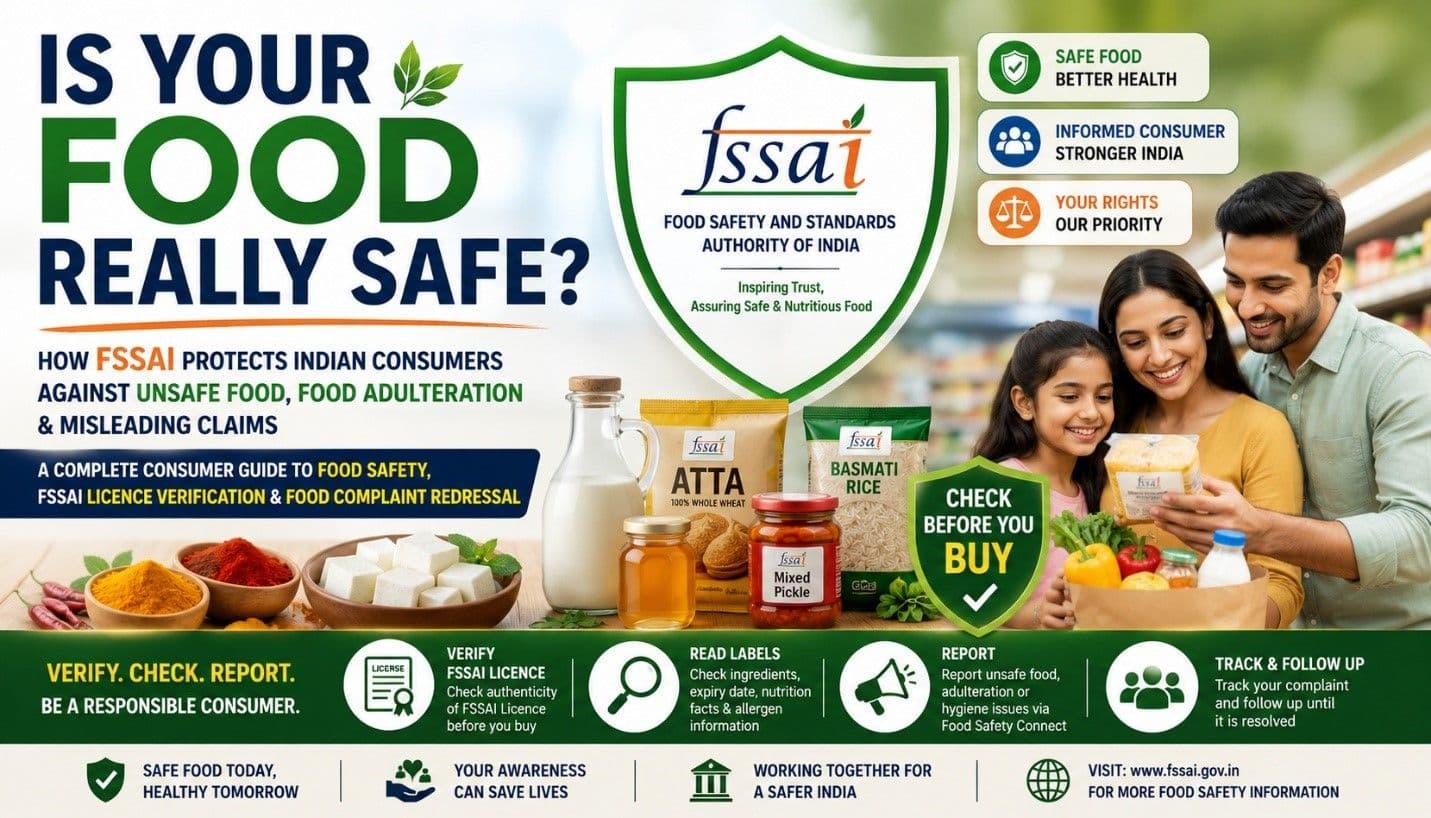
Food is one of the most basic necessities of life, and every consumer has the right to expect that the food they purchase is safe, hygienic and accurately labelled. Whether it is milk, edible oil, spices, packaged snacks, sweets, bottled water, restaurant meals or food ordered through online delivery platforms, consumers place their trust in food businesses every single day.
However, concerns relating to food adulteration, misleading labels, unhygienic food preparation, expired products and unsafe food handling continue to affect consumers across the country. Incidents involving contaminated food or poor hygiene not only result in financial loss but can also pose serious health risks, particularly for children, senior citizens and individuals with existing medical conditions.
Food safety is therefore much more than a regulatory requirement—it is a fundamental consumer right.
To protect public health and ensure that food available in the market meets prescribed safety standards, India has established a comprehensive food safety framework under the Food Safety and Standards Authority of India (FSSAI). The regulator plays a crucial role in setting food standards, licensing food businesses, promoting scientific regulation and strengthening consumer awareness.
For consumers, understanding the role of FSSAI is as important as knowing what to buy. An informed consumer is better equipped to identify genuine food businesses, read labels correctly, verify licences and report unsafe food whenever necessary.
Why Food Safety Matters More Than Ever
India's food ecosystem has undergone a remarkable transformation over the past decade. Consumers today have access to an unprecedented variety of food products and services through supermarkets, neighbourhood grocery stores, restaurants, cloud kitchens, e-commerce platforms and food delivery applications.
While this has increased convenience and consumer choice, it has also highlighted the need for stronger food safety awareness.
Consumers today frequently come across issues such as:
Many consumers are unaware that these issues can often be reported through the appropriate food safety authorities.
Consumer awareness remains one of the strongest tools for improving food safety standards across the country. Every complaint submitted by a responsible consumer helps regulators identify unsafe practices and strengthen enforcement.
What is FSSAI?
The Food Safety and Standards Authority of India (FSSAI) is the country's apex food regulator established under the Food Safety and Standards Act, 2006.
Its primary objective is to protect public health by ensuring that food sold in India complies with prescribed safety and quality standards.
Among its important responsibilities are:
Over the years, FSSAI has also launched several initiatives aimed at improving food hygiene, encouraging responsible food businesses and increasing consumer participation in food safety.
Food Safety Begins with Consumers
Food safety is not the responsibility of regulators alone.
Consumers also play an important role by making informed purchasing decisions and reporting unsafe food practices whenever they encounter them.
Simple habits can make a significant difference, including:
These precautions help consumers reduce the risk of purchasing unsafe or sub-standard food while encouraging greater accountability among food businesses.
Understanding Food Adulteration
Food adulteration remains one of the most serious challenges affecting consumers.
Adulteration refers to the addition, substitution or removal of substances in food in a manner that reduces its quality, safety or nutritional value. In some cases, adulteration is carried out to increase profits, while in others it results from poor manufacturing or storage practices.
Examples often reported include concerns relating to:
Consumers should avoid relying on rumours or unverified social media messages when assessing food safety. Whenever there is a genuine concern, it is advisable to verify facts through official sources and report suspected violations using the appropriate complaint mechanism.
Food safety improves when consumers remain informed, vigilant and willing to report genuine concerns through authorised channels.
FSSAI Licence Verification, Food Safety Connect and How to Report Unsafe Food – A Step-by-Step Consumer Guide
One of the biggest mistakes consumers make is assuming that every food business automatically complies with food safety standards. Before purchasing packaged food, ordering food online or dining at a restaurant, consumers should take a few simple steps to verify that the food business is operating under the applicable regulatory framework.
Why You Should Check the FSSAI Licence
Every eligible Food Business Operator (FBO)—including manufacturers, restaurants, hotels, cloud kitchens, caterers, food delivery kitchens, distributors and many food retailers—is required to obtain the appropriate FSSAI Registration or Licence based on the nature and scale of its business.
When purchasing packaged food or visiting a restaurant, consumers should look for the FSSAI Licence or Registration Number, which is generally displayed on product labels, restaurant premises or business information.
Checking this information helps consumers make informed choices and promotes greater transparency in the food ecosystem.
Verify Before You Trust
Consumers should never rely solely on attractive packaging or advertising claims.
Before making a purchase, it is advisable to:
Small precautions can significantly reduce food safety risks.
Food Safety Connect – A Digital Platform for Consumers
To make food safety more accessible and consumer-friendly, FSSAI has introduced Food Safety Connect, a dedicated digital platform that allows consumers to interact more effectively with the food safety system.
Through this platform, consumers can:
The platform is designed to encourage public participation in improving food safety standards across the country.
How to Report Unsafe Food – Step by Step
If you believe that a food product or food establishment has violated food safety standards, follow these simple steps:
Step 1 – Preserve the Evidence
Before consuming or discarding the product, collect relevant evidence wherever possible, such as:
Good documentation helps authorities understand the complaint more effectively.
Step 2 – Record Important Details
Write down essential information including:
Accurate information helps speed up the complaint process.
Step 3 – Submit the Complaint
Consumers can submit complaints through the Food Safety Connect platform or approach the appropriate State or Union Territory Food Safety Authority, depending on the nature of the issue.
Provide complete and accurate information while submitting the complaint.
Step 4 – Keep the Reference Number
After filing the complaint, preserve the acknowledgement or complaint reference number for future communication and tracking.
Step 5 – Cooperate if Additional Information is Required
Authorities may seek additional documents or clarification during the review process. Prompt cooperation helps facilitate effective complaint handling.
Ordering Food Online? Stay Alert
Food delivery platforms have transformed the way consumers access meals. While convenience has increased, consumers should remain vigilant when ordering food online.
Before placing an order:
Consumer awareness remains one of the most effective safeguards against poor-quality food.
Your Responsibilities as a Consumer
Food safety is a shared responsibility between regulators, food businesses and consumers.
Every consumer can contribute by:
An informed consumer helps create a safer food ecosystem for everyone.
Simple Food Safety Checklist
Before purchasing any food product, ask yourself:
✔ Is the packaging intact?
✔ Is the expiry date valid?
✔ Is the FSSAI Licence or Registration Number available?
✔ Does the label clearly mention ingredients?
✔ Are storage instructions provided?
✔ Does the product appear genuine and properly sealed?
If the answer to any of these questions raises concern, consumers should exercise caution before making a purchase.
Food safety begins with informed choices. By understanding the available consumer protection mechanisms and using them responsibly, every citizen can play an active role in promoting safer food and greater accountability across India's food supply chain.
Upbhokta Panchayat's View
Food safety is not merely the responsibility of regulators or food businesses—it is a shared responsibility involving every stakeholder in the food supply chain. While regulatory authorities establish standards and enforce compliance, consumers play an equally important role by making informed choices, reading labels carefully and reporting genuine food safety concerns through the appropriate channels.
At Upbhokta Panchayat, we believe that consumer awareness is one of the strongest pillars of food safety. An informed consumer can identify unsafe practices, encourage responsible business behaviour and contribute to a healthier marketplace. Simple actions such as verifying an FSSAI Licence, checking product labels, preserving purchase records and reporting unsafe food can make a significant difference in protecting public health.
Through our consumer education initiatives, independent research and awareness campaigns, we remain committed to empowering consumers with practical, reliable and easy-to-understand information that enables them to make safer and more informed decisions.
Conclusion
India's food ecosystem is expanding rapidly, offering consumers unprecedented choice and convenience. At the same time, ensuring food safety has become more important than ever. Every consumer has the right to receive food that is safe, hygienic and compliant with established quality standards.
The Food Safety and Standards Authority of India (FSSAI) has developed a comprehensive regulatory framework to strengthen food safety, improve compliance and provide consumers with accessible mechanisms for verification and grievance redressal. By verifying FSSAI licences, reading food labels carefully, purchasing from authorised food businesses and reporting genuine concerns through official channels, consumers can actively contribute to improving food safety across the country.
Food safety is not achieved through regulation alone—it is strengthened when regulators, food businesses and consumers work together. Greater awareness, responsible purchasing decisions and timely reporting of genuine concerns will help build a safer, healthier and more transparent food ecosystem for all.
Every informed consumer is an important partner in making India's food system safer and more accountable.

Six Workshops. Six Padyatras. Six Locations. One Mission to Strengthen Investor Protection at the Grassroots.