
LOADING...
When Kavita saw a designer saree advertisement on Instagram, the offer looked irresistible. The page had thousands of followers, attractive product photos, and dozens of positive comments.
When Kavita saw a designer saree advertisement on Instagram, the offer looked irresistible. The page had thousands of followers, attractive product photos, and dozens of positive comments.
“Festive offer – 70% discount. Limited stock available.”
Kavita contacted the seller through direct message. The response was immediate and professional.
Once the payment was made, the seller sent a message saying:
“Your order will be shipped tomorrow.”
The next day, there was no tracking number.
When Kavita followed up, the messages were not delivered.
Within hours, the Instagram page had disappeared completely.
The seller had blocked her account.
Fraudsters increasingly use Instagram, Facebook, and other social platforms because they can:
Create attractive storefronts quickly.
Buy fake followers and comments.
Offer unrealistic discounts.
Collect advance payments through UPI.
Delete the account after receiving money.
Instead of waiting for a reply, she:
Took screenshots of the Instagram page.
Saved the UPI transaction ID.
Captured the chat conversation.
Reported the fraud on 1930.
Filed an online complaint on the cybercrime reporting portal.
Informed her bank about the suspicious transaction.
Many victims lose valuable evidence because the scammer deletes the account quickly.
Because the complaint was filed quickly, the transaction details were forwarded through the cyber fraud reporting mechanism.
While recovery is not guaranteed in every case, early reporting increased the chances of tracing the beneficiary account before the funds were withdrawn completely.
The discount is unusually high.
The seller insists on full advance payment.
No business address is provided.
Comments appear generic or repetitive.
The account was created recently.
There is no official website.
Only UPI payment is accepted.
Check the account creation date.
Look for a GST number or business registration.
Search the brand name independently.
Verify customer reviews outside the platform.
Avoid full advance payment to unknown sellers.
Use platforms that offer buyer protection when possible.
Call 1930 immediately.
Report the transaction to your bank.
Take screenshots before the account disappears.
Save the UPI transaction ID.
File an online cybercrime complaint.
Report the fake account to Instagram or Facebook.
Many victims wait several days hoping the seller will respond.
By then, the social media account may have been deleted and the money transferred through multiple accounts.
Immediate reporting gives investigators a better chance of tracing the funds.
“Consumers should treat social media stores with the same caution as unknown online sellers. A large follower count does not guarantee authenticity. Business details, independent reviews, and secure payment methods should be verified before making any advance payment.”
Verify the business independently.
Check reviews outside social media.
Avoid full advance payment to unknown accounts.
Save all screenshots and transaction details.
Report suspicious activity immediately through 1930.
A few minutes of verification can prevent a social media shopping bargain from becoming an expensive fraud.
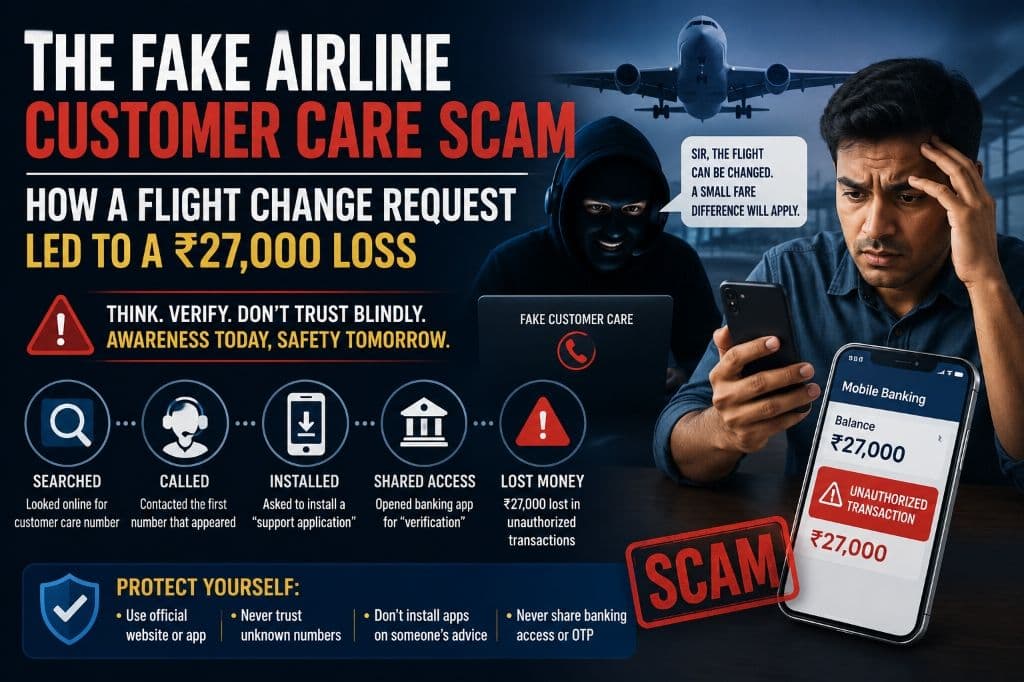
When Karan needed to reschedule a domestic flight, he searched online for the airline’s customer care number.
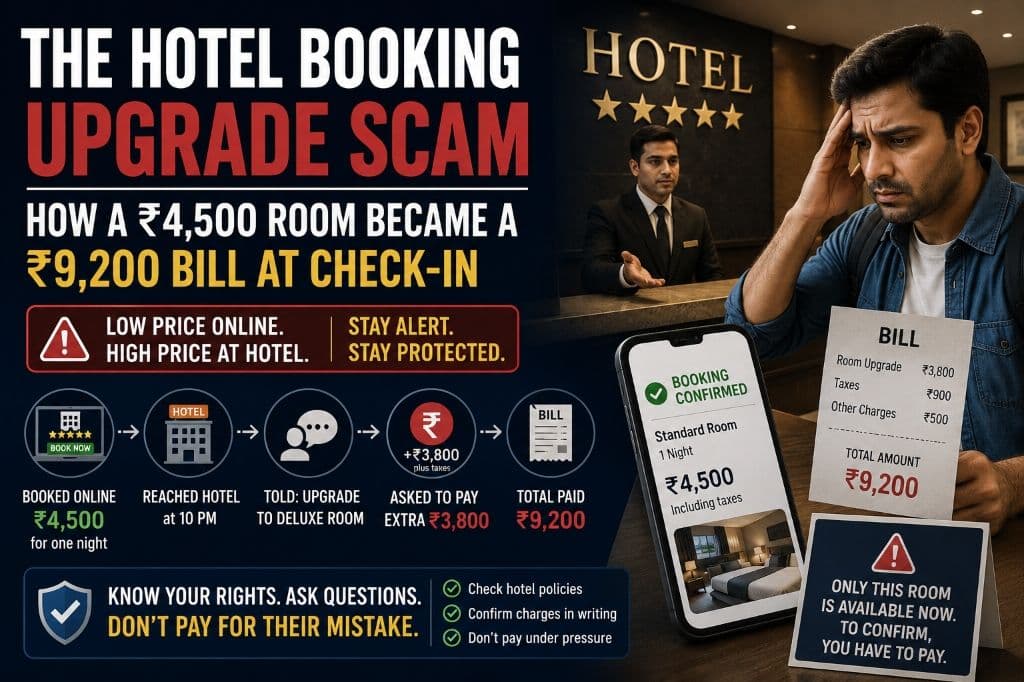
When Arvind booked a hotel through an online travel platform, the confirmation clearly showed ₹4,500 for one night, including taxes.