LOADING...
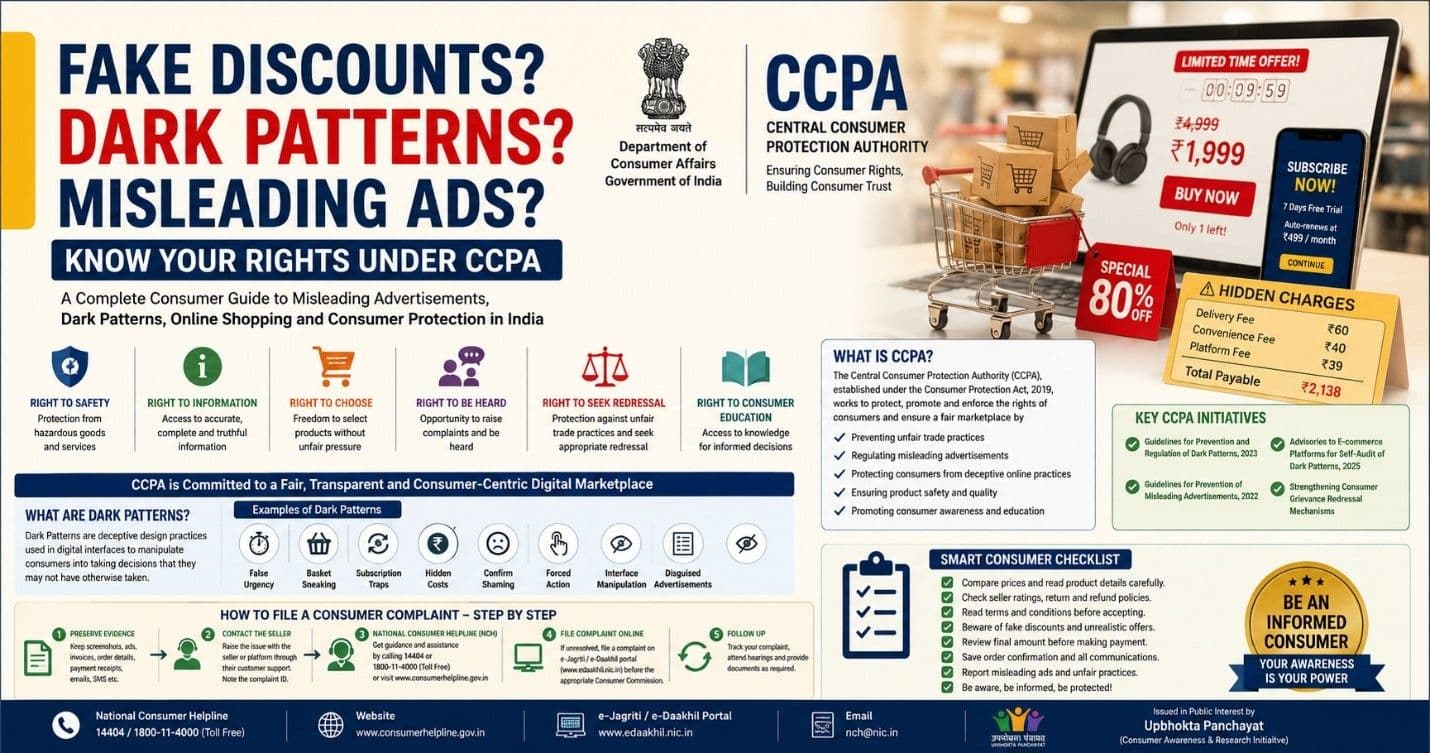
A Complete Consumer Guide to Consumer Rights, Online Shopping, Misleading Advertisements and Digital Consumer Protection in India
Online shopping has transformed the way Indians purchase products and services. From groceries and electronics to travel bookings, food delivery and financial services, consumers today make millions of digital transactions every day. Attractive discounts, flash sales, cashback offers and personalised recommendations have made online shopping more convenient than ever before.
However, this digital convenience has also created new challenges. Many consumers unknowingly fall victim to misleading advertisements, hidden charges, fake urgency, subscription traps, manipulated interfaces and deceptive online practices that influence purchasing decisions without their informed consent.
These practices are commonly referred to as "Dark Patterns."
Recognising the growing impact of such practices on consumer rights, the Central Consumer Protection Authority (CCPA), functioning under the Department of Consumer Affairs, Government of India, has taken significant steps to promote a fair, transparent and consumer-centric digital marketplace.
Understanding these rights has become essential for every online consumer.
Why Consumer Protection Matters in the Digital Economy
India has witnessed remarkable growth in digital commerce over the past decade. Consumers today purchase products and services through:
While these services have improved convenience and consumer choice, they have also increased the risk of deceptive online practices.
Many consumers unknowingly purchase products or services because websites or applications are designed to influence their behaviour through confusing layouts, misleading messages or unnecessary pressure.
Consumer protection is therefore no longer limited to defective products—it also includes ensuring fairness, transparency and informed choice in the digital marketplace.
What is the Central Consumer Protection Authority (CCPA)?
The Central Consumer Protection Authority (CCPA) is India's national consumer protection regulator established under the Consumer Protection Act, 2019.
The Authority has been empowered to safeguard consumer interests by addressing issues relating to:
The objective is to ensure that consumers receive truthful information and are able to make informed purchasing decisions without being misled by unfair commercial practices.
Understanding Consumer Rights
Every consumer has certain basic rights that remain equally relevant in today's digital economy.
These include:
Digital commerce has made these rights even more important, as purchasing decisions are increasingly influenced by online interfaces and digital marketing.
What are Misleading Advertisements?
Consumers often rely on advertisements while deciding whether to purchase a product or service.
However, not every advertisement presents complete or accurate information.
A misleading advertisement may:
Misleading advertisements can result in financial loss, disappointment and erosion of consumer trust.
The Consumer Protection Act, 2019 empowers the CCPA to take action against misleading advertisements and unfair trade practices in appropriate cases.
The Rise of Dark Patterns
One of the biggest challenges in today's digital marketplace is the increasing use of Dark Patterns.
Dark Patterns are user interface designs intentionally created to influence or manipulate consumer decisions in ways that may not always be obvious.
Instead of helping consumers make informed choices, these designs may encourage impulsive purchases, unnecessary subscriptions or acceptance of terms that consumers may not have intended to agree to.
Recognising this emerging challenge, the Government of India issued dedicated Guidelines for Prevention and Regulation of Dark Patterns, 2023, making India one of the first countries to introduce a specific regulatory framework addressing manipulative online design practices.
These guidelines aim to promote a more transparent, ethical and consumer-friendly digital marketplace while encouraging businesses to adopt fair digital practices.
Why Every Consumer Should Be Aware
Many consumers believe they have made an independent purchasing decision, whereas the website or application may have subtly influenced that decision through carefully designed user interfaces.
Consumer awareness is therefore one of the strongest safeguards against digital manipulation.
Understanding how misleading advertisements and Dark Patterns work enables consumers to:
In today's digital economy, awareness is the first line of consumer protection.
Understanding Dark Patterns: How to Identify Them and Protect Yourself While Shopping Online
As digital commerce continues to grow, consumers interact with hundreds of websites, mobile applications and online marketplaces every day. While most businesses strive to provide a smooth shopping experience, some digital interfaces are intentionally designed to influence consumer behaviour in ways that may reduce informed choice.
To address this issue, the Central Consumer Protection Authority (CCPA) notified the Guidelines for Prevention and Regulation of Dark Patterns, 2023 under the Consumer Protection Act, 2019. These guidelines prohibit specified deceptive design practices that mislead or manipulate consumers during online transactions.
Understanding these practices is the first step towards becoming a smarter and more informed digital consumer.
Common Dark Patterns Every Consumer Should Know
1. False Urgency
Consumers often see messages such as:
If such messages are inaccurate or designed to create unnecessary pressure, they may influence consumers to make hurried purchasing decisions.
Consumers should pause, compare products and avoid purchasing solely because of countdown timers or urgency messages.
2. Basket Sneaking
Sometimes additional products, services or donations may appear in the shopping cart without the consumer intentionally selecting them.
Consumers should always review their cart carefully before making payment.
3. Subscription Traps
Many digital services offer free trials or discounted introductory offers.
However, consumers should carefully check:
Before confirming payment.
4. Hidden Costs
Some websites display an attractive price initially but add:
Only at the final stage of payment.
Consumers should always review the complete payable amount before completing the transaction.
5. Confirm Shaming
Some websites attempt to influence users emotionally.
For example:
Such wording attempts to pressure consumers into selecting a particular option instead of allowing neutral decision-making.
6. Forced Action
Certain platforms may encourage consumers to create accounts, share personal information or subscribe to marketing communications before allowing access to basic services.
Consumers should carefully consider whether such information is genuinely necessary.
7. Interface Manipulation
Sometimes important information is deliberately made difficult to notice by:
Consumers should read every screen carefully before proceeding.
8. Disguised Advertisements
Advertisements may sometimes resemble independent recommendations or search results.
Consumers should distinguish promotional content from genuine reviews or editorial information before making purchasing decisions.
Tips to Protect Yourself While Shopping Online
Before making an online purchase:
✔ Compare prices across multiple platforms.
✔ Read product descriptions carefully.
✔ Check return and refund policies.
✔ Read verified customer reviews.
✔ Verify seller details wherever available.
✔ Never rush because of countdown timers.
✔ Review the final invoice before making payment.
✔ Preserve order confirmations, invoices and payment receipts.
Small precautions can help consumers avoid unnecessary disputes and financial loss.
How to Report Misleading Advertisements or Unfair Trade Practices
If consumers believe that they have been affected by misleading advertisements, deceptive online practices or other violations of consumer rights, they may consider using the available grievance redressal mechanisms.
A practical approach includes:
Step 1 – Preserve Evidence
Keep:
Step 2 – Contact the Seller or Service Provider
Many issues can be resolved directly through the company's customer support or grievance mechanism.
Keep the complaint reference number for future follow-up.
Step 3 – Use Consumer Grievance Platforms
If the issue remains unresolved, consumers may use the appropriate consumer grievance mechanisms, such as:
Before filing a complaint, consumers should ensure they have all supporting documents readily available.
Consumer Awareness is the Best Protection
Technology continues to evolve rapidly, and so do online business practices.
While regulators strengthen consumer protection through laws and guidelines, informed consumers remain the strongest defence against deceptive digital practices.
Consumers should never make purchasing decisions based solely on flashy advertisements, artificial urgency or unrealistic discount claims.
Taking a few extra minutes to verify information, compare options and understand the terms of purchase can help prevent financial loss and unnecessary disputes.
Upbhokta Panchayat's View
India's digital economy has created unprecedented convenience for consumers, but it has also introduced new challenges that require greater awareness and responsible business practices. Consumer protection today extends far beyond defective products—it includes transparency in digital interfaces, truthful advertising, fair pricing, protection of personal data and the right to make informed purchasing decisions without manipulation.
At Upbhokta Panchayat, we believe that consumer awareness is the strongest defence against unfair trade practices. Every consumer should understand how misleading advertisements, hidden charges, fake discounts and Dark Patterns can influence purchasing decisions. Awareness empowers consumers to ask the right questions, compare products objectively and exercise their rights confidently.
We also believe that responsible businesses benefit from a transparent marketplace. Fair competition, honest advertising and consumer trust are essential for building a sustainable digital economy. Regulators, businesses and consumers all have an important role in strengthening consumer confidence.
Through independent research, consumer education and practical guidance, Upbhokta Panchayat remains committed to promoting informed consumer choices and supporting the vision of a transparent, ethical and consumer-centric marketplace in India.
Conclusion
India's digital marketplace is growing at an extraordinary pace, offering consumers greater convenience and access to products and services than ever before. However, convenience should never come at the cost of transparency or consumer rights.
The Consumer Protection Act, 2019 and the initiatives of the Central Consumer Protection Authority (CCPA) have significantly strengthened India's consumer protection framework by addressing misleading advertisements, unfair trade practices and deceptive online design practices such as Dark Patterns.
For consumers, the best protection begins with awareness. Reading product information carefully, comparing prices, reviewing terms and conditions, preserving purchase records and reporting genuine concerns through appropriate grievance mechanisms are simple but effective steps that help create a safer digital marketplace.
As digital commerce continues to evolve, informed consumers and responsible businesses will together play a vital role in building a marketplace founded on fairness, transparency and accountability.
Consumer rights are not merely legal protections—they are essential to ensuring trust in India's growing digital economy.