LOADING...
The Money You Never Realise You Lost
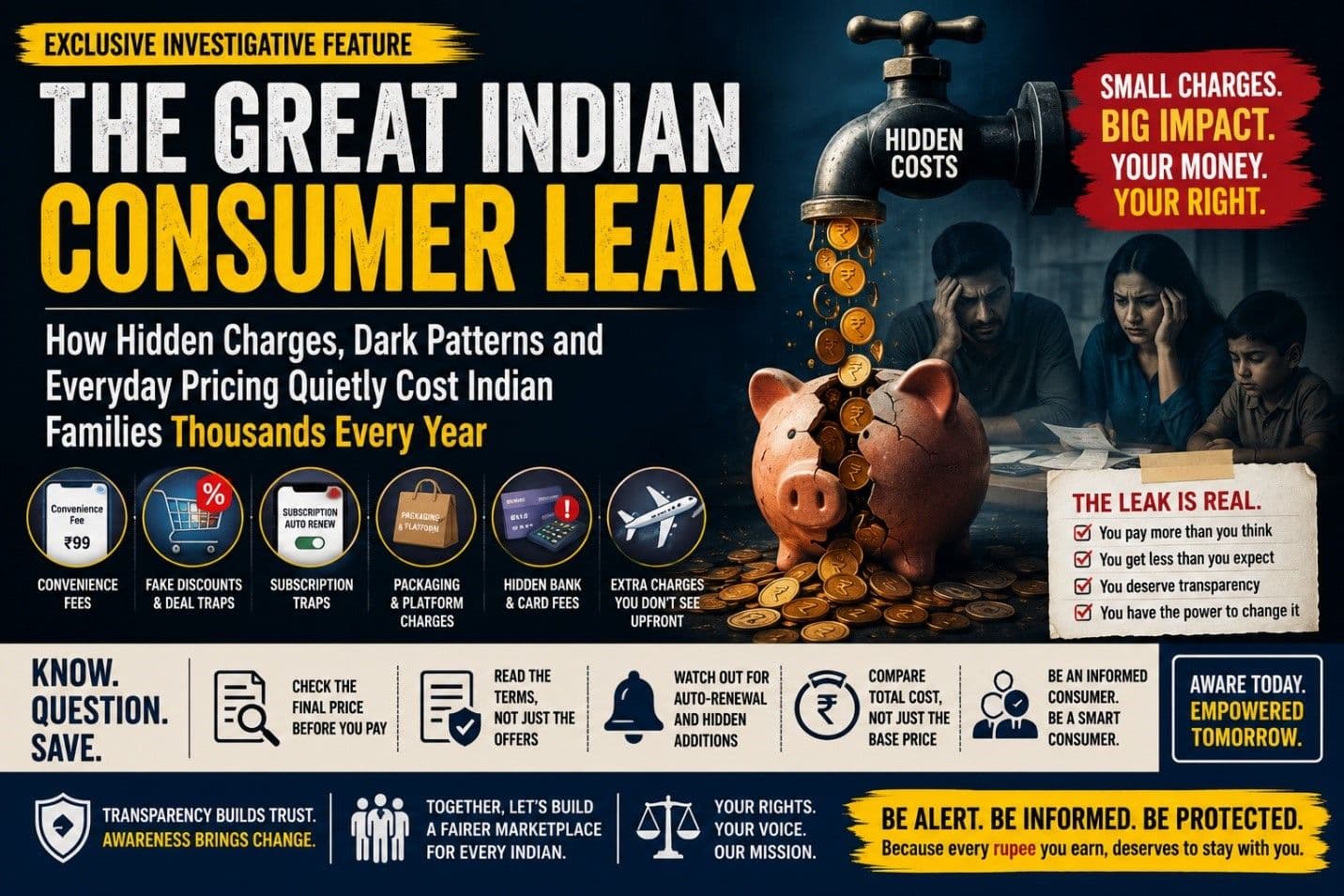
Imagine dropping ₹20, ₹50 or ₹100 from your pocket every few days. Most people would immediately notice and try to prevent it from happening again. Yet, millions of Indian consumers unknowingly lose small amounts of money every day—not because they have been robbed, but because these costs are hidden inside routine transactions.
A convenience fee while booking a ticket.
A platform fee on a food delivery app.
An automatically renewed subscription.
A credit card charge that went unnoticed.
A misleading "limited-time offer."
A service fee that appears only at the final payment page.
Individually, these amounts may seem insignificant. Collectively, they can add up to thousands of rupees for a family over the course of a year.
This is not always fraud. In many cases, the charges are disclosed somewhere in the purchasing process. The real concern is that consumers often do not fully understand them, notice them too late, or feel they have little practical choice but to accept them.
Upbhokta Panchayat calls this phenomenon "The Great Indian Consumer Leak"—the gradual and often unnoticed loss of money through hidden costs, confusing pricing and manipulative digital practices.
The New Age of Consumer Spending
Today's consumer no longer buys products only from neighbourhood shops. Banking, travel, insurance, healthcare, entertainment, education and grocery shopping have all become increasingly digital.
Convenience has improved significantly. However, digital platforms have also introduced new pricing structures that many consumers struggle to understand.
The final price paid is often very different from the price that initially attracted the consumer.
This gap between expectation and reality deserves greater public discussion.
The Psychology Behind Small Charges
Behavioural researchers have long observed that consumers focus primarily on the main advertised price while paying less attention to smaller additional costs introduced later in the buying journey.
When these charges appear individually, they rarely trigger strong reactions. Over time, however, repeated small expenses can have a meaningful impact on household budgets.
For businesses, transparency builds long-term trust. For consumers, understanding the total cost of a purchase is essential for informed decision-making.
Where Does Consumer Leakage Happen?
Banking
Many consumers carefully compare interest rates but overlook charges such as annual card fees, replacement card fees, late payment penalties, foreign transaction charges or account-related service fees.
Reading the schedule of charges before opening an account or applying for a financial product can help consumers make better choices.
Digital Payments
Digital payments have made transactions faster and easier. While many services remain free for consumers, users should still review payment confirmations carefully and understand any applicable convenience or service charges before completing a transaction.
Online Shopping
Online marketplaces often display attractive discounts. However, consumers should pay attention to:
The cheapest displayed price is not always the lowest final cost.
Food Delivery
Food delivery platforms have transformed urban lifestyles.
Consumers should review:
Understanding the complete bill helps consumers compare value more effectively.
Airlines and Travel
Air travel pricing has become increasingly modular.
Additional charges may apply for:
Comparing the final payable amount rather than only the base fare provides a more accurate picture of total travel costs.
Subscription Economy
Many digital services operate on recurring subscriptions.
Consumers should regularly review:
Small monthly charges can continue unnoticed for long periods.
Healthcare
Healthcare decisions often involve complex pricing.
Consumers should seek clear information about:
Greater transparency benefits both patients and healthcare providers.
Education
Parents frequently budget for tuition but may underestimate additional expenses such as:
Requesting a complete fee structure at the beginning of the academic year can improve financial planning.
Dark Patterns: When Design Influences Decisions
Not every confusing website is intentionally misleading. However, some digital interfaces may encourage hurried decisions through design choices such as:
Consumers should take a moment to review each screen before confirming a transaction.
Convenience Should Never Replace Transparency
Consumers are generally willing to pay for genuine convenience and quality service.
The concern arises when pricing becomes unnecessarily complicated or difficult to understand.
Transparent pricing strengthens consumer confidence, reduces disputes and supports fair competition.
Questions Every Consumer Should Ask
Before completing any purchase, consider the following:
✓ What is the final amount I will actually pay?
✓ Are there any recurring charges?
✓ Can I cancel this service easily?
✓ Have I compared alternatives?
✓ Do I really need this add-on?
✓ Have I read the important terms?
A few extra seconds can prevent unnecessary spending.
What Businesses Can Do
Organisations that prioritise long-term consumer trust should consider:
Consumers reward businesses that are honest, predictable and easy to understand.
What Policymakers Can Consider
Consumer-friendly markets benefit from clear rules and informed choices. Continued dialogue among regulators, businesses, consumer organisations and digital platforms can help strengthen transparency in pricing, disclosures and online purchasing experiences while supporting innovation.
The Cost of Ignoring Small Losses
Most families carefully plan for major expenses such as housing, education and healthcare. Yet it is often the accumulation of small, overlooked costs that quietly weakens household budgets.
The challenge is not only financial. When consumers repeatedly encounter confusing pricing or unexpected charges, trust in the marketplace can gradually decline.
A transparent marketplace benefits everyone—consumers make informed decisions, honest businesses compete fairly and confidence in the economy grows stronger.
Conclusion
The Great Indian Consumer Leak is not about one company, one industry or one transaction. It is about a broader consumer experience in which small, often unnoticed costs become part of everyday life.
The solution is neither fear nor suspicion. It is awareness.
Every consumer should know the final price before making a purchase.
Every business should strive to communicate prices honestly.
Every regulator should continue promoting transparency and fair practices.
And every informed consumer has the power to ask one simple question before making any payment:
"Is this really the full price?"
That single question could save Indian consumers not just money—but confidence, trust and peace of mind.