LOADING...
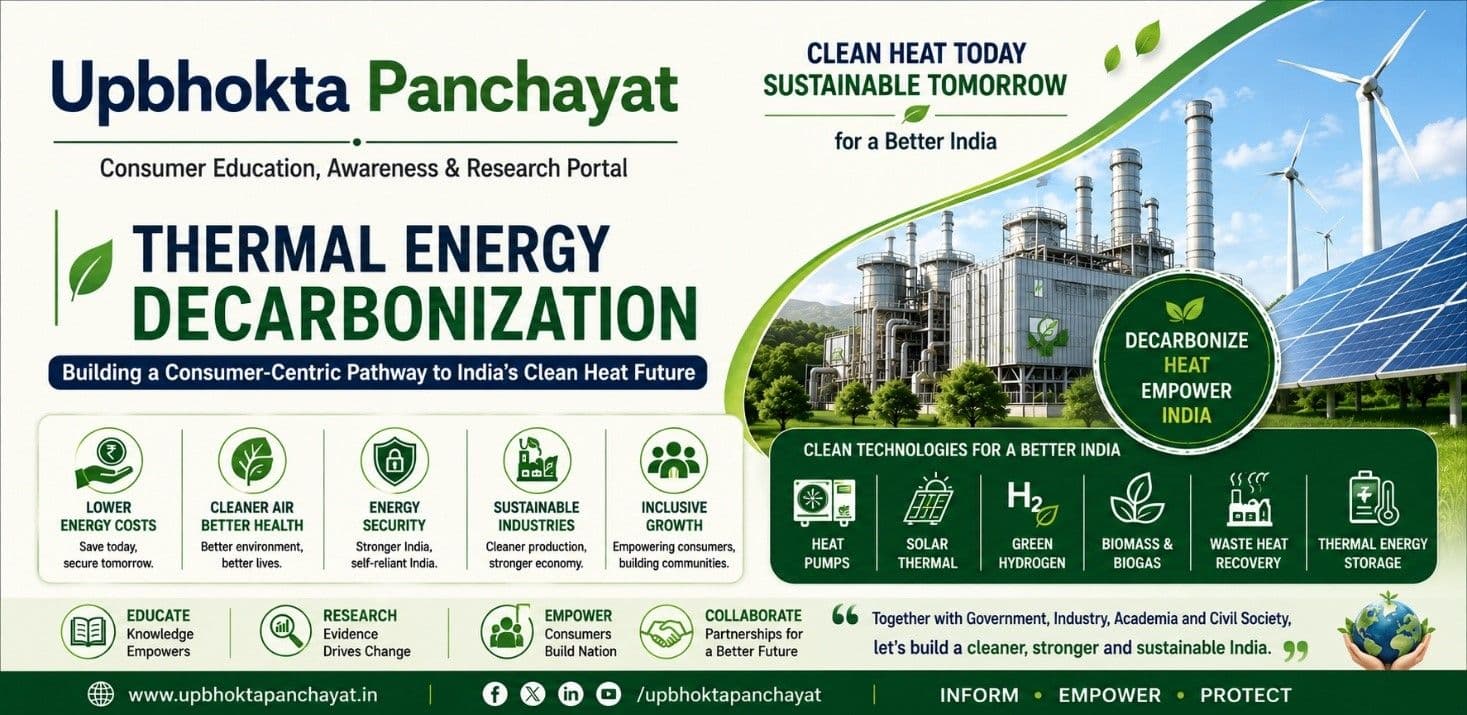
Understanding the Need for Thermal Energy Decarbonization
Executive Summary
India stands at a defining moment in its energy transition. Over the past decade, the country has made remarkable progress in expanding renewable electricity, improving energy efficiency, and promoting clean mobility. However, one of the largest and often overlooked sources of carbon emissions continues to be thermal energy—the heat used in industries, commercial establishments, institutions, and households.
From manufacturing steel, cement, pharmaceuticals, textiles, chemicals, and food products to heating water, cooking meals, and processing agricultural produce, thermal energy forms the backbone of economic activity. Yet, much of this heat is still generated using fossil fuels such as coal, furnace oil, diesel, and natural gas. As a result, thermal energy remains a significant contributor to greenhouse gas emissions, air pollution, and rising energy costs.
Thermal Energy Decarbonization is the process of replacing carbon-intensive heating systems with cleaner, energy-efficient, and low-emission technologies. This transition is not only essential for meeting India's climate commitments but also for strengthening energy security, improving public health, reducing long-term operating costs, and enhancing industrial competitiveness.
For consumers, this transition is about more than reducing emissions. It is about ensuring that clean energy solutions are affordable, reliable, transparent, and accessible. The success of India's clean heat transition will depend not only on technological innovation but also on informed consumers, supportive policies, and collaborative action among government, industry, academia, financial institutions, and civil society.
Introduction
When people think about clean energy, the conversation usually revolves around solar panels, wind farms, electric vehicles, and battery storage. While these technologies are transforming the electricity sector, another equally important area often receives far less attention—thermal energy.
Heat is one of the most fundamental forms of energy. Every day, it is used to manufacture products, preserve food, sterilize medical equipment, refine chemicals, produce cement and steel, generate steam, heat buildings, and provide hot water in homes. Without thermal energy, modern economies simply cannot function.
Unlike electricity, which is visible through power lines and appliances, thermal energy is largely invisible to consumers. However, its environmental footprint is substantial. A significant proportion of industrial heat and commercial heating continues to rely on fossil fuels, making thermal energy one of the major contributors to carbon emissions worldwide.
As countries intensify efforts to combat climate change and achieve net-zero emissions, the decarbonization of heat has emerged as one of the next major frontiers in sustainable development.
For India, where industrial growth, urbanisation, and rising consumer demand continue to increase energy consumption, addressing thermal emissions has become both an environmental necessity and an economic opportunity.
Understanding Thermal Energy Decarbonization
Thermal Energy Decarbonization refers to reducing or eliminating carbon emissions generated during the production and use of heat.
Traditionally, industries and commercial facilities have relied on fossil fuels because they are readily available, capable of producing high temperatures, and have historically been cost-effective. However, these fuels also emit significant quantities of carbon dioxide and other pollutants that contribute to climate change and poor air quality.
Decarbonization aims to replace conventional heating systems with cleaner alternatives while maintaining industrial productivity, energy reliability, and economic viability.
Some of the key technologies driving this transition include:
Rather than relying on a single solution, experts increasingly recognise that a combination of technologies, supported by innovation and policy, will be necessary to meet diverse heating requirements across sectors.
Why Thermal Energy Matters More Than Ever
Thermal energy is one of the largest forms of energy consumption globally. Nearly every manufactured product that consumers purchase—from packaged food and medicines to automobiles and construction materials—requires heat at some stage of production.
In India, industries such as steel, cement, chemicals, fertilisers, food processing, paper, textiles, ceramics, and pharmaceuticals all depend heavily on thermal energy.
Beyond industry, millions of households use thermal energy daily for cooking, water heating, and other domestic purposes. Hotels, hospitals, educational institutions, shopping centres, and commercial buildings also consume significant quantities of heat.
As India's economy continues to grow and aspirations rise, demand for thermal energy is expected to increase substantially. If this demand continues to be met primarily through fossil fuels, it could create additional pressure on energy imports, increase environmental pollution, and make long-term climate targets more difficult to achieve.
This makes thermal energy decarbonization not merely an environmental strategy but an economic and social imperative.
India's Opportunity in the Global Energy Transition
India has emerged as one of the world's fastest-growing major economies and has demonstrated strong leadership in renewable energy deployment. Ambitious initiatives in solar power, green hydrogen, energy efficiency, and sustainable infrastructure reflect the country's commitment to building a cleaner energy future.
The next phase of this transition must include clean thermal energy.
By investing in innovative heating technologies and modern industrial processes, India can:
Importantly, thermal energy decarbonization also aligns with India's broader vision of sustainable economic growth, circular economy principles, and responsible resource utilisation.
Why Consumers Should Be Part of the Conversation
Energy transitions are often discussed from the perspective of governments, regulators, and industries. However, consumers ultimately experience the outcomes of these transitions through product prices, utility bills, environmental quality, and public health.
A consumer-centric approach to thermal energy decarbonization means ensuring that clean heating technologies are not only environmentally sustainable but also affordable, reliable, and easy to adopt.
Consumers also play an increasingly important role by choosing energy-efficient products, supporting sustainable businesses, and encouraging greater market transparency.
As awareness grows, informed consumers can become powerful drivers of cleaner production practices and responsible energy use.
For this reason, consumer organisations have an important role in creating awareness, promoting evidence-based discussions, and ensuring that consumer interests remain central to India's clean energy transition.
Technologies, Consumer Benefits and Industry Challenges
Technologies Driving the Clean Heat Revolution
Thermal Energy Decarbonization is not dependent on a single technology. Different industries require different temperatures, production processes, and energy sources. Therefore, the future of clean heat lies in a combination of innovative technologies that can meet diverse industrial and consumer needs while reducing carbon emissions.
Heat Pumps: Improving Energy Efficiency
Heat pumps are increasingly recognised as one of the most energy-efficient heating technologies available today. Instead of generating heat directly, they transfer heat from the surrounding air, water, or ground, making them significantly more efficient than conventional electric heaters.
Heat pumps are widely used for:
As electricity grids become cleaner through greater renewable energy integration, heat pumps can substantially reduce both energy consumption and greenhouse gas emissions.
Solar Thermal Systems
While solar photovoltaic panels generate electricity, solar thermal systems capture sunlight to produce heat directly.
These systems are particularly effective for:
With abundant sunshine throughout much of the year, India has significant potential to expand the use of solar thermal technologies, particularly in regions with high solar irradiation.
Green Hydrogen
Certain industries require temperatures exceeding 1,000°C, where conventional electrification is still technically challenging.
Green hydrogen, produced using renewable electricity, is emerging as a promising solution for sectors such as:
Although large-scale deployment remains at an early stage, falling renewable energy costs and supportive government initiatives are expected to improve its commercial viability in the coming years.
Biomass and Biogas
India generates substantial quantities of agricultural residue and organic waste every year. When managed responsibly, these resources can be converted into renewable thermal energy.
Biomass and biogas offer multiple benefits:
Sustainable sourcing and efficient combustion technologies remain essential to maximise environmental benefits.
Waste Heat Recovery
Many industries release considerable amounts of unused heat into the atmosphere during manufacturing processes.
Waste Heat Recovery (WHR) systems capture this otherwise wasted energy and reuse it for heating, steam generation, or electricity production.
Industries such as cement, steel, glass, and chemicals have already demonstrated that waste heat recovery can significantly improve energy efficiency while reducing operating costs and emissions.
For many businesses, this represents one of the fastest pathways towards improved sustainability and enhanced competitiveness.
Why Industry is Embracing Thermal Decarbonization
Businesses today face increasing expectations from investors, regulators, customers, and international markets to reduce their environmental footprint.
Thermal Energy Decarbonization is no longer viewed solely as an environmental obligation; it is becoming a strategic business decision.
Key business advantages include:
Many multinational companies now evaluate suppliers based on sustainability performance, making low-carbon manufacturing an important commercial advantage.
Consumer Benefits Beyond Environmental Protection
Consumers often associate clean energy with environmental protection. However, Thermal Energy Decarbonization also delivers tangible economic and social benefits.
Lower Energy Costs
Energy-efficient technologies reduce fuel and electricity consumption, leading to lower operational expenses over time.
Although initial investment costs may be higher, lifecycle savings often compensate for these expenditures.
Improved Air Quality
Reducing fossil fuel combustion lowers emissions of particulate matter, sulphur dioxide, and nitrogen oxides.
Cleaner air contributes to:
Reliable Energy Supply
Diversifying energy sources through renewable electricity, biomass, and green hydrogen improves national energy security and reduces dependence on imported fuels.
Greater energy independence ultimately benefits consumers through increased market stability.
Sustainable Products
Consumers around the world are increasingly seeking products manufactured through environmentally responsible processes.
Industries adopting low-carbon thermal technologies will be better positioned to meet these evolving market expectations while strengthening consumer trust.
Challenges on the Road Ahead
Despite strong momentum, several barriers continue to slow the adoption of clean thermal technologies.
High Capital Costs
Modern heating technologies often require significant upfront investment.
This can discourage adoption, particularly among Micro, Small and Medium Enterprises (MSMEs), which frequently operate with limited financial resources.
Technology Awareness
Many businesses remain unfamiliar with available clean heating technologies and their long-term economic benefits.
Greater awareness and demonstration projects are needed to encourage wider adoption.
Financing Constraints
Access to affordable financing remains a major challenge, particularly for small industries.
Expanding green financing mechanisms, concessional loans, and blended finance models can accelerate investment.
Infrastructure Development
The widespread adoption of green hydrogen, renewable electricity, and advanced heating technologies requires continued investment in infrastructure, transmission networks, and supply chains.
Skilled Workforce
Successful implementation also depends on engineers, technicians, project developers, and maintenance professionals with expertise in emerging clean energy technologies.
Investment in skill development will therefore be essential.
The Need for Collaborative Action
No single stakeholder can achieve Thermal Energy Decarbonization alone.
Governments must create supportive policies and regulatory certainty.
Industries must invest in cleaner technologies and operational efficiency.
Financial institutions should expand access to affordable green finance.
Research institutions and universities should accelerate innovation.
Consumer organisations can raise awareness, encourage informed decision-making, and represent consumer interests during policy development.
Only through collaboration can India successfully transition towards a low-carbon thermal economy while maintaining affordability and inclusive economic growth.
Policy Recommendations, Future Outlook and the Consumer Perspective
Building an Enabling Policy Ecosystem
The transition towards low-carbon thermal energy cannot be achieved through technology alone. A supportive policy environment is equally important to encourage investment, reduce financial risks, and accelerate the adoption of clean heating solutions across industries and households.
India has already demonstrated global leadership in renewable energy deployment, energy efficiency programmes, and large-scale clean energy initiatives. A similar level of policy focus on thermal energy can help unlock new opportunities for sustainable industrial growth while improving consumer welfare.
An effective policy framework should encourage innovation, facilitate access to affordable financing, strengthen quality standards, and promote widespread awareness of clean thermal technologies.
Strengthening Consumer Awareness
One of the greatest challenges is the limited public understanding of thermal energy and its impact on everyday life. While consumers are increasingly aware of solar power and electric vehicles, awareness of clean heating technologies remains relatively low.
Consumer education should therefore become an integral part of India's clean energy transition.
Awareness initiatives should focus on:
An informed consumer is more likely to adopt sustainable technologies and encourage industries to improve product quality and transparency.
The Importance of Standards and Consumer Protection
As demand for clean heating technologies grows, maintaining consumer confidence will become increasingly important.
The market must ensure that products are safe, efficient, reliable, and supported by transparent warranty and service commitments.
Strengthening testing, certification, and quality assurance mechanisms will help consumers make informed choices while protecting them from misleading claims and substandard products.
Transparent product information, energy performance ratings, and responsible marketing practices will further strengthen trust in emerging technologies.
Financing the Transition
Although many clean heating technologies provide significant long-term savings, high upfront investment continues to remain a major barrier.
Expanding access to affordable financing can accelerate adoption across both residential and industrial sectors.
Potential financing mechanisms include:
Particular attention should be given to Micro, Small and Medium Enterprises (MSMEs), which contribute significantly to India's economy but often face financial constraints when adopting modern technologies.
Learning from Global Best Practices
Several countries have demonstrated that thermal energy decarbonization is both technically feasible and economically beneficial.
International experiences highlight the importance of:
While India's energy landscape is unique, adapting global best practices to local conditions can help accelerate progress without compromising affordability or economic growth.
A Roadmap for India
India's transition to clean thermal energy should be guided by a phased and inclusive approach.
Short-Term Priorities
Medium-Term Priorities
Long-Term Vision
Upbhokta Panchayat's Perspective
Thermal Energy Decarbonization is not only an environmental or industrial issue—it is fundamentally a consumer issue.
Consumers ultimately bear the cost of inefficient energy systems through higher utility bills, increased product prices, poor air quality, and health-related impacts. At the same time, they also stand to benefit the most from affordable, efficient, and sustainable heating solutions.
As an independent consumer awareness and public policy initiative, Upbhokta Panchayat believes that consumer interests should be integrated into every stage of India's clean heat transition—from policy formulation and technology deployment to product standards and market practices.
Consumer organisations can contribute by:
A truly successful transition will be measured not only by lower carbon emissions but also by increased consumer confidence, improved affordability, and equitable access to clean energy solutions.
Conclusion
Thermal Energy Decarbonization represents one of the most significant opportunities in India's journey toward sustainable development. It offers the potential to reduce emissions, strengthen energy security, improve industrial competitiveness, and create healthier communities.
However, technology alone cannot deliver this transformation. Success will require visionary policymaking, sustained investment, continuous innovation, skilled human resources, and active participation from consumers.
As India advances towards its clean energy ambitions, thermal energy should receive the same strategic attention as renewable electricity and electric mobility. A balanced approach that combines environmental responsibility with economic growth and consumer welfare will ensure that the transition remains inclusive and sustainable.
Upbhokta Panchayat remains committed to supporting this journey through consumer awareness, independent research, stakeholder engagement, and constructive policy dialogue. We believe that meaningful collaboration between government, industry, research institutions, financial organisations, and consumer groups can help build a cleaner, more resilient, and consumer-centric energy future for India.
The transition to clean heat is not merely a technological shift—it is an opportunity to redefine how energy serves society. By placing consumers at the centre of this transformation, India can demonstrate that sustainable development is most successful when it is inclusive, transparent, and beneficial for every citizen.